
NorthStar Restoration Services
Storm Damage Cleanup in Wausau, WI for Fast Property Recovery
Professional storm damage cleanup service for homes and businesses across Wausau and Central Wisconsin.
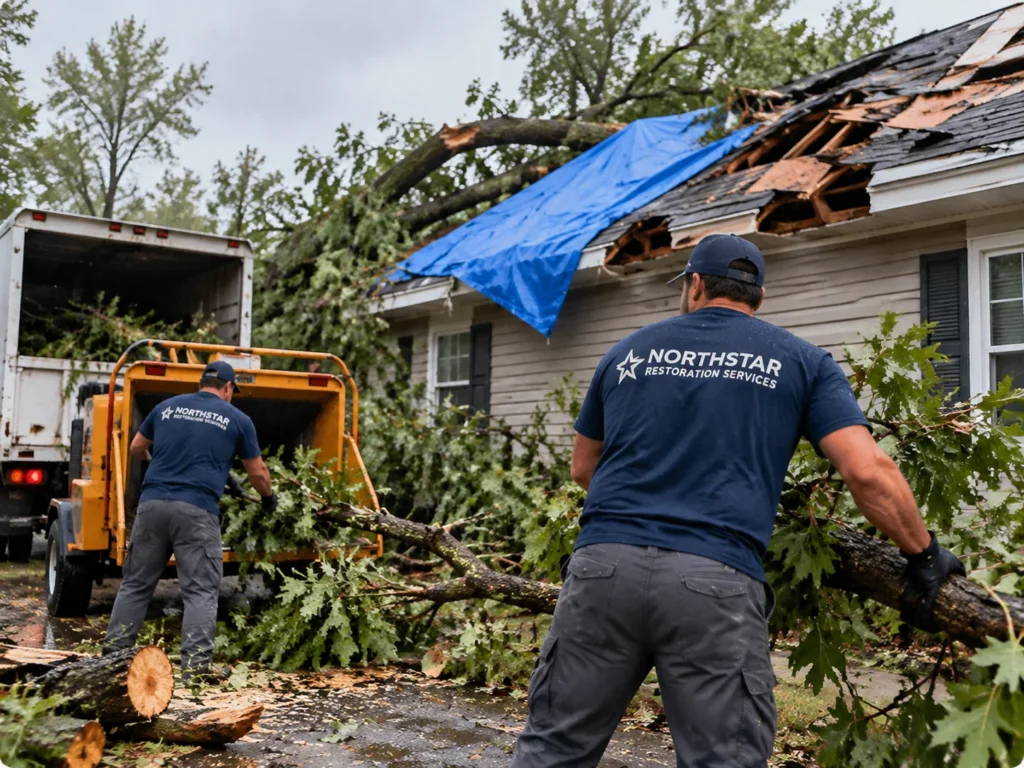
Severe weather can damage a property in more than one way at the same time. High winds can open the roof, hail can damage exterior materials, branches can break windows, and heavy rain can enter the structure before the storm has fully passed. NorthStar Restoration Services provides Storm Damage Cleanup for homes and businesses in Wausau and across Central Wisconsin, with 24/7 emergency response, damage documentation, cleanup, drying, and repair coordination.
NorthStar is based at 4900 Stewart Ave in Wausau. The company currently identifies its team as IICRC Certified and fully insured, and states that its restoration professionals bring more than 100 years of combined experience. NorthStar also advertises a 60-minute emergency response target.
We work with All Insurance Companies
Storm Damage Cleanup should begin with safety and stabilization. Once the area can be approached safely, the restoration team documents the loss, secures openings, removes hazardous debris and standing water, dries affected materials, evaluates belongings, plans repairs, and records the work for the property owner and insurer
What Damage Can a Severe Storm Leave Behind?
Storm losses are often a combination of exterior, structural, and moisture problems. A roof opening can lead to interior leaks. A tree impact can damage framing and siding. Wind-driven rain can enter through openings that are not obvious from the ground.
Common conditions include:
- roof damage from wind, hail, limbs, or flying material
- structural damage around framing, ceilings, walls, or exterior assemblies
- broken windows and doors that leave the building exposed
- Wet flooring, drywall, insulation, ceilings, and stored belongings
- flood water or rainwater entering lower levels
- Scattered materials that create trip, cut, or access hazards
A professional storm damage assessment should identify both visible problems and areas that may have been affected indirectly. A separate storm damage inspection can also help define which building components need emergency protection, drying, cleaning, specialist review, or repair.
Commercial water damage restoration
What Should You Do Immediately After the Storm?
Safety comes before cleanup. National Weather Service post-storm safety guidance warns that damaged buildings, gas lines, sharp debris, and downed power lines can remain dangerous after severe weather. Do not approach fallen electrical lines or enter a building that appears unstable. If you smell gas or suspect a serious structural problem, leave the area and contact the appropriate emergency or utility service.
If the property can be approached safely, take photos or video from safe locations before moving materials. Contact your insurer when appropriate and avoid permanent changes before the loss is documented unless immediate action is needed to prevent additional damage.
For more immediate-response guidance, see NorthStar’s emergency storm response guide. NorthStar’s current guide addresses roof leaks, flooding, debris, drying, and post-storm restoration planning.
Standing water should also be treated carefully. EPA flooded-home guidance notes that flooded buildings can contain electrical, chemical, sewage, and microbial hazards and that some cleanup situations are better handled by qualified professionals.
Commercial water damage restoration
What Does Professional Storm Damage Cleanup Include?
A complete response should deal with the building in the correct order. Emergency protection comes before cosmetic cleaning, and moisture needs to be addressed before damaged areas are closed back up.
1. Safety Review and Damage Documentation
The first site visit establishes what can be accessed safely and what requires additional precautions. Photos, measurements, moisture findings, and visible damage can be recorded before major cleanup begins.
This stage helps the restoration team create a property-specific scope instead of treating every weather loss the same way.
2. Stabilize Open or Exposed Areas
Immediate property stabilization may include temporary protection for openings that allow rain, animals, or unauthorized entry into the structure.
Depending on the conditions, crews may use emergency board up for damaged doors or windows and roof tarping for a compromised roof until permanent work can be planned.
This early storm damage mitigation helps reduce additional weather exposure before permanent repairs begin.
3. Remove Hazardous Debris
Once access is controlled, storm debris removal can address loose roofing, siding, branches, broken materials, and other hazards around the work area.
A project involving a tree impact may also require fallen tree cleanup before portions of the building can be evaluated or protected.
Heavy limbs, unstable trees, sharp materials, or debris near utilities should not be treated as routine DIY yard cleanup.
4. Remove Water and Dry the Structure
If rain or flooding entered the property, water extraction may be needed before drying begins.
NorthStar’s water damage cleanup service handles water removal, drying, dehumidification, cleaning, and restoration for residential and commercial losses.
After removal, structural drying uses appropriate air movement, dehumidification, and moisture monitoring based on the materials affected.
EPA guidance for flooded homes recommends drying flooded areas and belongings as quickly as practical, generally within 24 to 48 hours. If a flooded home and its contents could not be dried during that period, EPA advises assuming mold growth may be present.
This is why water damage after storm events should not be treated as only a roofing problem. Water can travel through insulation, wall cavities, ceilings, flooring systems, and lower levels before it becomes visible.
5. Evaluate Belongings and Interior Materials
Storms can affect more than the building itself. Furniture, documents, electronics, textiles, inventory, and stored items may need cleaning, drying, relocation, or documentation.
Contents restoration decisions should separate items that can reasonably be saved from materials that cannot be cleaned or dried.
When moisture has created a microbial concern, mold prevention depends on correcting the moisture problem and drying affected materials rather than simply covering stains or odors.
If visible growth or a larger moisture problem is discovered, NorthStar’s mold remediation service can address that separate scope.
6. Repair and Reconstruction Planning
Cleanup does not fix missing shingles, damaged framing, failed drywall, broken siding, or other permanent material loss.
Storm damage repair begins after the property is stabilized and damaged components have been evaluated.
Depending on the loss, permanent work may involve roofing, siding, windows, interior finishes, framing, or other construction. The restoration plan should clearly distinguish temporary protection from permanent repairs.
7. Final Review and Documentation
Before the project closes, the team should review the completed scope, remaining repairs, moisture status where applicable, and project records.
NorthStar states that it works directly with insurance companies and offers direct insurance billing. Coverage decisions still depend on the property owner’s policy and insurer.
Our Storm Damage Cleanup Process
NorthStar’s current website describes a four-step company-wide restoration workflow: emergency contact, damage assessment, cleanup and restoration, and final inspection.
For a weather loss, that process can be expanded into this practical sequence:
Stage | What Happens | Main Goal |
Emergency contact | Gather key information and dispatch the response team | Start safely and quickly |
Assessment | Inspect, document, and identify immediate risks | Define the scope |
Stabilization | Protect openings and control exposure | Reduce additional loss |
Cleanup and drying | Remove hazards, water, and affected materials as needed | Prepare the building for repair |
Restoration | Repair or coordinate damaged components | Return the property to usable condition |
Final walkthrough | Review completed work and documentation | Confirm the agreed scope is addressed |
This gives property owners a clear answer to what happens after the first emergency call instead of leaving the recovery process vague.
Commercial water damage restoration
How Different Types of Storms Change the Cleanup Plan
The response should match the cause of loss because different weather events create different hazards.
High Wind Events
Wind damage repair may involve missing roofing, damaged siding, broken exterior components, tree impacts, and rain entering newly created openings. Temporary weather protection is often the first priority before interior work continues.
Hail
Hail damage may affect roofing, siding, windows, gutters, vents, and other exterior materials. Some damage can be difficult to confirm safely from ground level, so homeowners should avoid unsafe roof climbing after severe weather.
Tornadoes and Severe Thunderstorms
Tornado cleanup can involve widespread debris, damaged structures, trees, utilities, and restricted site access. The National Weather Service advises staying away from damaged electrical lines and unstable structures after severe storms.
Snow and Ice Events
Winter storm damage can involve roof leaks, ice-related water entry, fallen limbs, frozen or broken building components, and prolonged power loss. The recovery plan may therefore require both exterior protection and interior moisture work.
Home and Business Storm Recovery Are Not Identical
A residential loss often focuses on safe occupancy, bedrooms, living areas, personal belongings, and returning the household to a functional routine.
Storm damage restoration for a home should make it clear which spaces can safely be used and which remain under cleanup or repair.
Business losses add operational concerns such as employee access, inventory, tenants, customers, equipment, records, and downtime.
NorthStar’s commercial restoration services describe a process that includes rapid dispatch, assessment, mitigation, restoration planning, cleanup, reconstruction, and final documentation.
For a larger business loss, disaster recovery planning may require phased access so critical operations can resume while other parts of the building remain under restoration.
How Does NorthStar Help With the Insurance Process?
Document the property before cleanup whenever it is safe and practical. EPA guidance also recommends contacting the insurance company and photographing the home and belongings before flood cleanup begins.
NorthStar states that it works directly with insurers. Project photos, measurements, affected-material notes, drying records, estimates, and insurance paperwork can make communication about the loss easier to organize.
An insurance claim is still governed by the policy. A restoration company can document damage and explain its work, but the insurer determines coverage, deductibles, exclusions, and claim decisions.
What Affects Cleanup Pricing in Wausau?
There is no reliable flat price because storm cleanup cost depends on the actual property loss. A few stable branches outside are very different from a tree through a roof, several wet rooms, or a commercial building with widespread exterior and interior damage. Common cost drivers include:
- Size of the affected area
- Accessibility and safety conditions
- Amount and type of debris
- Water removal and drying requirements
- Temporary weather protection
- Contents handling
- Demolition or material removal
- Repair and reconstruction scope
- Equipment and labor required
For non-emergency planning, use NorthStar’s request an estimate page. NorthStar directs active emergencies to its 24/7 phone service instead.
Why Choose NorthStar Restoration Services in Wausau?
NorthStar Restoration Services is based in Wausau and serves homes and businesses across Central Wisconsin. Its website currently lists IICRC certification, full insurance, 24/7 emergency availability, direct insurance billing, and a 60-minute response target.
The company’s About NorthStar page states that its team has more than 100 years of combined experience and works on large and complex damage-repair projects.
That full-service structure matters after severe weather because a single property may require exterior protection, water removal, drying, cleaning, contents decisions, and construction work.
Professional storm cleanup services should connect stabilization, moisture work, and repair instead of treating each task as an isolated job.
Frequently Asked Questions!
property can be approached safely.
If the building is open to rain, contains standing water, or has unstable materials, early stabilization can reduce additional exposure while the full scope is assessed.
Not always.
Stay out if you see major structural movement, smell gas, have floodwater around the building, or see electrical hazards. The National Weather Service advises avoiding damaged buildings and fallen electrical lines after storms.
Small, stable debris may be manageable for some homeowners.
Large limbs, trees resting on structures, branches near electrical lines, and unstable materials can be dangerous. Leave high-risk removal to trained crews and utility professionals when electrical infrastructure is involved.
The opening should be temporarily protected when safe, then affected interior areas should be checked for moisture.
Wet insulation, ceilings, walls, and flooring may require removal or drying depending on the material and extent of saturation.
Yes.
EPA guidance says a flooded home and belongings that could not be dried within 24 to 48 hours should be assumed to have mold growth. Moisture removal and drying should therefore be part of the recovery plan when significant water enters a structure.
Yes.
NorthStar publishes restoration services for both residential and commercial properties. The project scope changes based on building size, occupancy, contents, business continuity, and the type of weather damage.
Coverage varies by policy, cause of loss, exclusions, deductibles, maintenance conditions, and insurer decisions.
Document the property and contact your carrier for policy-specific guidance. NorthStar can provide documentation related to the restoration work it performs.
NorthStar also maintains a dedicated Green Bay storm cleanup service for properties in that service area.
Proudly Serving Central Wisconsin
When you need a local storm damage cleanup company near you, NorthStar Restoration Services is here with fast, friendly, expert help.
Need Storm Damage Cleanup in Wausau? Call NorthStar 24/7
If severe weather has damaged your home or business, avoid focusing on cosmetic cleanup while the property is still exposed, unsafe, or wet. NorthStar can assess the site, stabilize affected areas, remove water and debris, coordinate restoration work, and document the project.
Call (866) 439-9318 for NorthStar’s 24/7 emergency service, or use the contact page for a non-emergency request. NorthStar Restoration Services is located at 4900 Stewart Ave, Wausau, WI 54401.
NOT AN EMERGENCY?
REQUEST AN ESTIMATE