

Eliminating Mold, Restoring Comfort with Mold Damage Restoration
When mold damages drywall, flooring, framing, insulation, or other building materials, removing visible growth is only part of the job. NorthStar Restoration Services provides Mold Damage Restoration for homes and businesses in Wausau and Central Wisconsin, addressing the moisture source, contaminated materials, drying needs, cleaning, and property repairs needed to return the space to a safer, usable condition.
NorthStar is based in Wausau, offers 24/7 emergency response, and states that its team brings more than 100 years of combined restoration experience. The company also displays IICRC certification and serves communities throughout Central Wisconsin.
What Does Professional Mold Restoration Include?
Mold Damage Restoration is the coordinated process of finding the moisture problem, controlling affected areas, removing or cleaning damaged materials, drying the structure, and repairing what mold or water has compromised. The objective is not to “sterilize” a building; it is to correct the moisture conditions, remove contamination appropriately, and restore affected building components. The EPA mold prevention and moisture control guidance emphasizes that moisture control is fundamental to successful mold management.
For related specialty services, NorthStar also provides professional mold remediation and mold removal services. Keeping these services connected helps property owners understand whether they need contamination control, material removal, structural restoration, or a combination of services.
Common situations we handle
Hidden moisture behind walls or ceilings; visible growth after leaks or flooding; musty odors in basements, attics, crawl spaces, bathrooms, and utility areas; damaged drywall, insulation, trim, subflooring, or framing; mold cleanup after a water event; mold mitigation before repair work; mildew remediation concerns that require professional evaluation; residential mold remediation needs; commercial mold remediation needs.
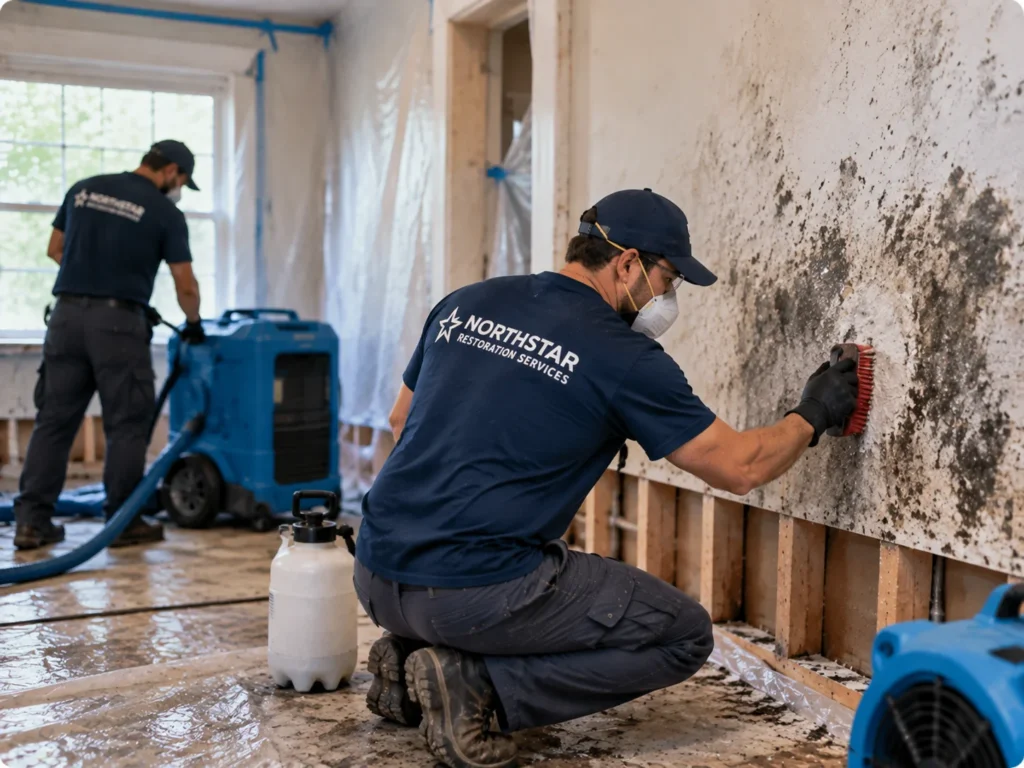
When Mold Damage Restoration Is the Right Service
This service is appropriate when mold has moved beyond a surface-cleaning issue and has affected building materials or requires controlled removal and repairs. Warning signs can include recurring staining, softened drywall, warped trim, persistent musty odor, condensation, or known water damage.
If you are unsure what you are seeing, start with a mold inspection focused on the condition of the property and the moisture source. A mold testing plan may be useful in selected situations, but the EPA notes that routine sampling is often unnecessary when visible mold is already present; testing should be used when the results will meaningfully affect the plan.
You can also review NorthStar’s guide to the signs of mold in your home before scheduling an assessment.
Our Six-Step Restoration Process
A strong Mold Damage Restoration process should be easy for the property owner to understand. NorthStar’s related service pages describe inspection, containment, removal, sanitization, structural repairs, air purification, third-party testing or inspections when appropriate, in-house reconstruction, and coordination with insurance providers.
1. Property and Moisture Assessment
We begin by identifying visible damage, suspect materials, water pathways, and areas that may still be damp. Moisture meters and other professional tools can help locate conditions that are not obvious from the surface.
2. Source Control and Work Planning
A lasting result depends on correcting the moisture source. That may involve stopping a leak, completing drying work, improving drainage, or coordinating repairs before restoration proceeds. EPA guidance emphasizes that moisture control is the key to controlling mold.
3. Containment and Air Management
When disturbance could release spores or contaminated dust, the work area may need containment. Depending on the project, technicians can use barriers, controlled airflow, and HEPA air filtration to reduce migration into unaffected areas. EPA guidance describes containment as an important control for larger or more complex projects and recommends HEPA vacuuming in appropriate cleanup situations.
4. Material Removal and Cleaning
Porous materials that cannot be effectively restored may need to be removed, while salvageable surfaces can be cleaned using methods appropriate to the material and level of contamination. HEPA vacuuming may be used during final cleaning after materials have been thoroughly dried.
5. Drying and Verification
The affected area must be dry before repairs are closed in. The team checks the moisture conditions, confirms that the source has been addressed, and evaluates whether additional drying or cleaning is required.
6. Repair and Reconstruction
After affected materials are removed and the area is ready for rebuilding, mold damage repair may include drywall replacement, trim work, flooring repairs, insulation replacement, painting, or other reconstruction required by the loss.
Residential and Commercial Property Solutions
Every property presents a different risk profile. Homes may have concealed moisture in basements, bathrooms, attics, kitchens, wall cavities, or crawl spaces. Businesses may need scheduling and containment strategies that reduce disruption to employees, tenants, customers, inventory, or sensitive equipment.
NorthStar’s service structure covers both home and business restoration, and its related remediation page describes inspection, containment, cleaning, structural repair, air purification, and reconstruction support. That broader scope is important when the visible growth is only one part of a larger property-damage problem.
For crawl-space-specific prevention guidance, see NorthStar’s article on protecting crawl spaces from mold.
How Fast Should You Act?
Prompt action matters because ongoing moisture can continue damaging building materials and create conditions that support additional growth. EPA guidance recommends drying wet or damp materials within 24–48 hours when possible and keeping indoor relative humidity below 60%, ideally between 30% and 50%.
If an active leak, flood, sewage event, or other urgent water source is involved, ask whether 24/7 emergency mold remediation support should be coordinated with water extraction or emergency drying. The priority is to stop the source, protect unaffected areas, and establish a clear scope of work.
Health and Indoor-Air Considerations
Mold-related content should be accurate and avoid exaggerated medical claims. CDC/NIOSH reports associations between damp buildings and respiratory symptoms, asthma, allergic rhinitis, and other health effects. People with asthma, mold allergies, chronic lung disease, or weakened immune systems may need additional caution.
NorthStar’s article on the health risks of mold exposure provides additional background. For symptoms or personal medical concerns, consult a qualified healthcare professional; a restoration contractor should not diagnose health conditions.
What Affects Treatment and Repair Cost?
Mold remediation cost depends on the size and location of the affected area, accessibility, the type of building materials involved, the amount of demolition required, drying needs, containment requirements, air-management needs, and the extent of repair or reconstruction.
A small accessible area with a corrected moisture source is different from a multi-room loss involving wall cavities, flooring, HVAC components, or structural materials. The most useful estimate is based on an onsite assessment and a defined scope rather than a generic price-per-square-foot promise.
Does Insurance Cover Mold Remediation?
Coverage depends on the policy and the cause of the loss. Mold associated with a sudden, covered water event may be treated differently from long-term seepage, deferred maintenance, or excluded conditions. NorthStar’s related service page states that the company coordinates with insurance providers, which can help keep documentation, photos, scope details, and repair decisions organized.
Before work begins, ask your insurer what is covered, what documentation is required, whether there is a mold-related sublimit, and whether emergency mitigation can begin before an adjuster arrives. Keep records of the moisture source, affected materials, invoices, and photographs.
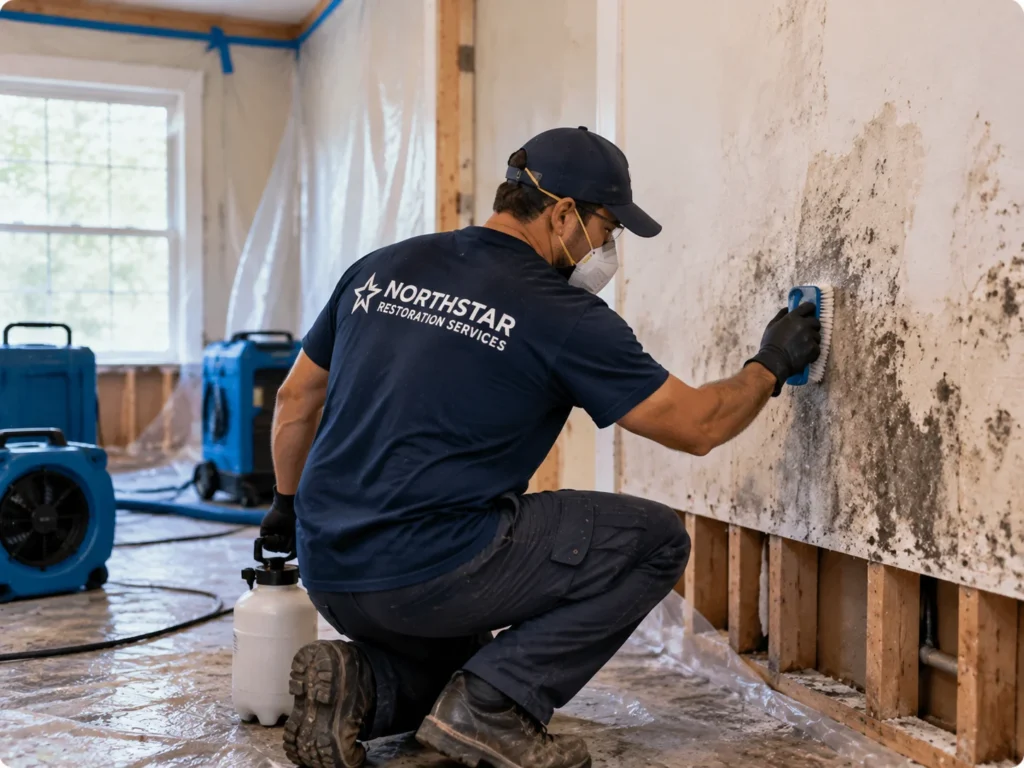
Why Choose NorthStar in Wausau?
If you are comparing local mold contractors, look for documented training, clear scope writing, moisture-focused diagnosis, appropriate containment, transparent communication, and the ability to handle repairs after contaminated materials are removed. The best mold remediation company for a specific property is the one that can explain what is damaged, why it happened, what will be removed or saved, how the area will be verified, and what happens next.
NorthStar is based in Wausau and states that its team has more than 100 years of combined experience. Its website identifies training and certification for mold-related work and shows IICRC certification. You can review the company’s background and credentials and customer reviews before scheduling service.
If you searched for mold remediation near me because you need a local team, NorthStar serves Wausau and communities across Central Wisconsin, including Mosinee, Weston, Stevens Point, Wisconsin Rapids, Marshfield, Minocqua, and surrounding areas.
NorthStar Restoration Services
Choosing A Restoration Service
Selecting a trusted mold damage restoration company near me is crucial. Expertise, certifications, and fast response matter. Proper services ensure safe and effective cleanup. NorthStar provides complete care for homes and businesses.
What To Look For
Certified technicians with extensive training and proven expertise in mold restoration, ensuring high-quality results for every property.
Years of experience handling various mold scenarios guarantee reliable and efficient solutions.
Positive reviews and testimonials from satisfied clients, reflecting trust and consistent performance.
Fast emergency response teams are ready to address mold issues promptly to minimize damage.
Full-service restoration and prevention services covering inspection, removal, and ongoing protection to maintain a healthy environment.
These qualities ensure reliable mold damage restoration services.
Preventing Mold From Returning
The repair is only durable if moisture stays under control. Fix leaks promptly, maintain drainage, vent moisture-producing appliances to the outside when possible, use bathroom and kitchen exhaust systems, and monitor humidity in damp seasons.
EPA guidance recommends keeping indoor relative humidity below 60%, ideally 30–50%. NorthStar also has a detailed guide to humidity and mold growth for property owners who want a prevention checklist after restoration.
Schedule an Assessment
If mold has damaged building materials or followed a water event, NorthStar can evaluate the affected area and explain the next steps. Schedule Mold Damage Restoration in Wausau or Central Wisconsin by calling (715) 302-0529 or using the contact form.
You will get a clearer scope when the assessment answers four questions: Where is the moisture coming from? What materials are affected? What can be safely restored? What must be removed, dried, or rebuilt?
Frequently Asked Questions!
Removal focuses on contaminated material and visible growth. Damage restoration goes further by addressing moisture, drying, cleaning, and repairing building components affected by the loss.
Some limited surface problems may be manageable for property owners, but hidden growth, recurring moisture, large affected areas, HVAC involvement, extensive porous-material damage, or health-sensitive occupants can justify professional evaluation. EPA guidance recommends experienced professionals for large or complex projects.
No. EPA guidance says sampling is usually unnecessary when visible growth is already present. Testing can be useful when the source is unclear, health or legal concerns affect decision-making, or a qualified professional determines that results will change the scope.
The timeline depends on the size of the affected area, how quickly the moisture source can be corrected, drying time, containment needs, material removal, and the extent of reconstruction. An onsite assessment is the best way to establish a realistic schedule.
It depends on the affected area, occupant sensitivity, containment design, and the type of work being performed. The project team should explain which areas can remain occupied and when temporary relocation may be appropriate.
NorthStar’s related service information states that it coordinates with insurance providers. Coverage decisions remain with the carrier and policy, but organized documentation can make the insurance claim process easier to manage.
Recurring growth usually means the moisture condition has not been fully corrected. Look for plumbing leaks, roof or foundation water entry, condensation, poor ventilation, high humidity, or damp materials that were not completely dried. EPA identifies moisture control as the central requirement for controlling recurring mold.
Proudly Serving Central Wisconsin
Looking for something else?
Wrap Up Conclusion
Mold damage threatens your property and health. NorthStar Restoration Services delivers fast, professional mold damage restoration. Our experts safely remove mold, restore your space, and prevent future growth. Protect your home today.