
NorthStar Restoration Services
Commercial Sewage Cleanup in Wausau, WI
A sewage backup can shut down restrooms, kitchens, offices, tenant areas, storage rooms, and customer-facing spaces within minutes. NorthStar Restoration Services provides Commercial Sewage Cleanup for businesses in Wausau and Central Wisconsin with 24-hour emergency availability. NorthStar’s current site identifies Wausau as its home base and promotes commercial sewage response among its emergency restoration services.
If you are searching for commercial sewage cleanup near me, the provider should be able to explain the contaminated area, worker-protection plan, extraction scope, materials that may need removal, cleaning and disinfection steps, drying plan, documentation, and the conditions required before affected areas return to use. EPA states that sanitary sewer overflows can threaten public health and that sewage-contaminated building areas need thorough cleaning and disinfection. The ANSI/IICRC S500 standard also covers safety, microbial contamination, drying technology, inspections, documentation, and risk management for professional water-damage restoration.
What Does Commercial Sewage Cleanup Include?
The service is more than pumping liquid from the floor. The work can involve controlling access, identifying the source, separating affected zones, removing sewage and debris, evaluating contaminated materials, cleaning and disinfecting restorable surfaces, drying wet assemblies, controlling odors, documenting the project, and coordinating repairs when needed.
A sewage event should also be distinguished from an ordinary clean-water loss. Customers often search for black water cleanup when wastewater contains sewage or other heavy contamination. Whatever terminology is used, the work plan should be based on the actual source, affected materials, exposure conditions, and applicable site requirements rather than a generic water-removal checklist.
When Professional Sewage Response Is Needed
Commercial losses can result from sewer-line backups, blocked building drains, overflowing toilets, septic-system failures, damaged wastewater piping, grease-related blockages, storm-related sewer surcharge, or failures in lower-level drainage systems. 1-800 WATER DAMAGE separately addresses sewer backups, septic failures, and toilet overflows, while SERVPRO highlights sewer-line backups and contaminated water as distinct sewage-loss scenarios.
Professional sewage remediation becomes particularly important when contaminated water has spread across porous finishes, entered wall cavities, affected multiple rooms, reached inventory or equipment, or creates an exposure concern for people entering the area.
A sewage backup cleanup project may also require a plumber, drain specialist, septic contractor, municipal utility, or another trade to correct the underlying cause. IICRC S500 notes that correcting the source is generally the property owner’s responsibility unless the restorer or another specialist is separately engaged for that work.
Our Commercial Cleanup Process
A professional Commercial Sewage Cleanup project should progress from safety and source control to removal, cleaning, drying, verification, and a clear handoff into repair.
1. Confirm Site Access, Source, and Immediate Hazards
The first call should establish what happened, whether wastewater is still entering the property, which areas are affected, whether electrical or other building systems create additional hazards, and who is authorized to approve emergency work. An emergency sewage response should also identify business-critical spaces such as kitchens, restrooms, server rooms, production zones, healthcare areas, retail space, and tenant access points.
Employees should not be sent into contaminated areas merely to move property or begin cleanup. OSHA recognizes wastewater exposure as a workplace hazard and states that employers must evaluate the work and select appropriate protective measures.
2. Restrict Access and Establish the Work Zone
Affected areas should be separated from normal traffic according to the loss conditions and building layout. Where the project plan calls for them, containment barriers can help control movement between affected and unaffected spaces. Worker protection should match the actual hazard. OSHA guidance notes that personal protective equipment for wastewater work can include protective gloves, boots, aprons, face protection, or other equipment based on the employer’s exposure assessment.
For restaurants, healthcare environments, schools, food-service areas, and other regulated facilities, reopening or inspection requirements may vary according to jurisdiction and facility type. The page should not promise one universal closure or reopening rule.
3. Remove Sewage and Gross Contamination
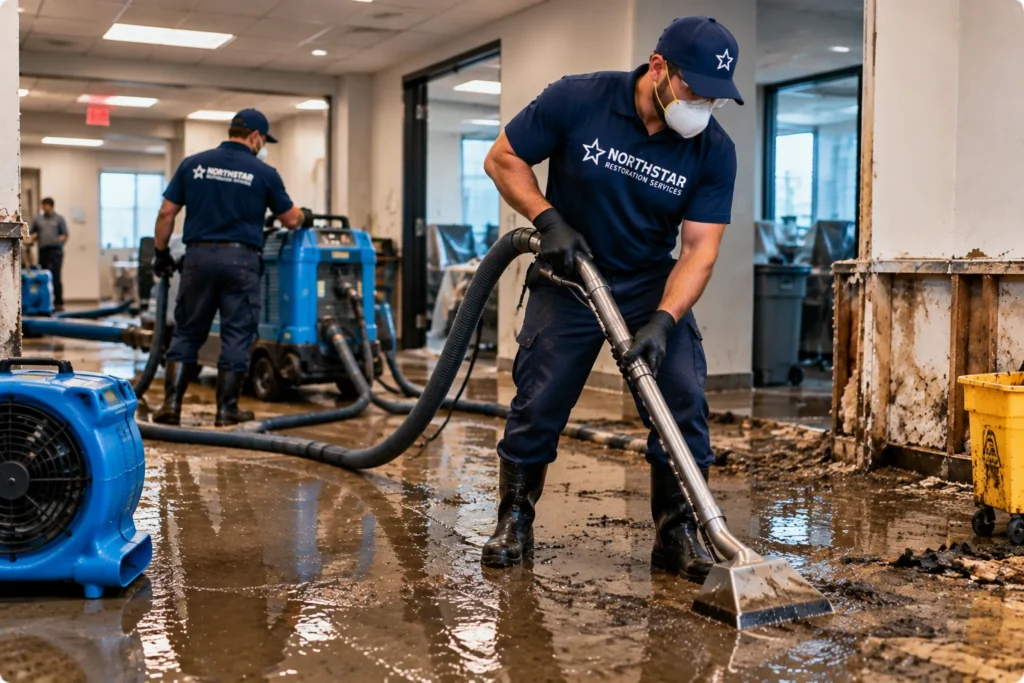
The next priority is contaminated water removal using equipment appropriate to the volume, access, and site conditions. Professional sewage extraction may use pumps, extractors, hoses, and collection equipment while technicians remove solid debris and limit unnecessary spread into unaffected areas.
EPA notes that sewage backups can damage property and that contaminated areas require thorough cleaning and disinfection.
4. Evaluate Materials: Clean, Remove, or Refer
Not every material exposed to sewage should automatically be saved, and not every material automatically requires demolition. The decision should consider:
- Porosity
- Physical condition
- Duration of exposure
- Contamination
- Accessibility
- Manufacturer requirements
- Whether the material can be effectively cleaned and dried
EPA specifically notes that rugs, curtains, flooring, wallboard panels, and upholstered furniture exposed to sewage usually need replacement. That makes porous material removal an important project decision when affected items cannot be appropriately restored.
5. Clean and Disinfect Restorable Surfaces
After gross contamination is removed, sewage sanitization should follow a defined cleaning process using products appropriate for the surface and intended application. The contractor should be able to identify the cleaning or disinfecting product, follow label directions, explain required contact time when relevant, and protect workers and occupants according to the project plan.
Avoid unsupported claims that one chemical “sterilizes” every building material or permanently eliminates every microorganism. EPA guidance for sewage-contaminated spaces emphasizes cleaning and disinfection rather than broad universal guarantees.
6. Dry Wet Building Materials
Once contamination has been addressed appropriately, remaining moisture still needs to be managed. Structural drying may involve air movement, dehumidification, controlled material removal, and other methods based on the affected assemblies and environmental conditions.
Moisture monitoring should continue until the project team has documented that relevant materials meet the drying criteria established for the job. IICRC S500 specifically covers psychrometry, drying technology, instruments, inspections, and project documentation.
7. Address Remaining Odor
Sewage deodorization should occur after source removal and cleaning—not instead of them. Persistent odor can indicate remaining contaminated material, trapped moisture, inaccessible residue, or another unresolved source. Additional odor-control methods should therefore be selected according to what remains after physical cleanup.
8. Document the Work and Define the Next Phase
A useful commercial project file can include:
- Initial photographs
- Affected-area notes
- Moisture readings
- Materials removed
- Equipment records
- Cleaning products
- Disposal decisions
- Customer authorizations
- Repair recommendations
Good insurance claim documentation helps the business owner, property manager, adjuster, and carrier understand the work. Coverage itself depends on the individual policy, cause, exclusions, endorsements, limits, and insurer determination. If the property needs broader repair or reconstruction, link naturally to NorthStar’s commercial water damage restoration service rather than duplicating a complete rebuild process here.
What Can Be Saved After a Sewage Backup?
The answer depends on the material and exposure. Hard, nonporous, intact surfaces may be candidates for cleaning and disinfection when the site-specific process supports it. Highly absorbent or physically damaged materials can be much harder to restore effectively.
EPA’s sanitary-sewer guidance specifically notes that several absorbent building and furnishing materials exposed to sewage typically require replacement.
For losses that involve additional biological hazards beyond the sewage event itself, direct users to NorthStar’s commercial biohazard service rather than expanding this page into every contamination scenario. NorthStar already maintains a separate commercial page for that intent.
Can Part of a Business Stay Open?
Sometimes, but not automatically. The decision depends on the affected zone, facility type, contamination pathways, ventilation, employee and customer routes, work methods, and applicable facility requirements.
SERVPRO’s current competitor page specifically emphasizes isolating affected areas where possible so unaffected portions of a commercial property may continue operating.
NorthStar can compete more credibly by documenting how its own project managers evaluate separation and access instead of promising that every business can stay open. Business interruption should be discussed during the initial assessment so critical operations, tenant access, customer routes, deliveries, and reopening priorities can be incorporated into the work plan.
Commercial Properties We Can Support
A response plan can differ across:
- Restaurants and food-service properties
- Offices
- Retail stores
- Hotels
- Multi-family buildings
- Schools and childcare facilities
- Healthcare and dental properties
- Warehouses
- Manufacturing facilities
- Municipal and institutional buildings
For commercial wastewater cleanup, the written scope should clearly identify whether the source is sewage, process wastewater, floodwater, or another type of contaminated water because the hazards and specialist involvement can differ.
What About Septic Failures and Toilet Overflows?
1-800 WATER DAMAGE makes septic-system failure and toilet-overflow cleanup separate service pathways, which is a useful content and conversion benchmark. NorthStar can cover those intents concisely:
Toilet Overflow
Determine what entered the area, whether contamination is present, and how far the water spread before choosing a cleanup method.
Sewer-Line Backup
Stop use of affected fixtures and determine whether the blockage requires separate plumbing or municipal investigation.
Septic-System Failure
Coordinate cleanup with a qualified septic professional when the tank or system itself requires service. EPA advises that trained sp
What Determines Commercial Cleanup Pricing?
Sewage cleanup cost depends on the actual project rather than one universal square-foot number. Important factors can include:
- Size of the affected area
- Depth and spread of wastewater
- Source of the backup
- Number of rooms or floors
- Materials affected
- Amount of material requiring removal
- Access restrictions
- Required work-zone controls
- Extraction and drying equipment
- After-hours response
- Disposal requirements
- Repair or reconstruction needs
A useful estimate should separate immediate mitigation, cleaning/disinfection, drying, contents, and later repairs so the customer understands what each phase includes.
Why Choose NorthStar for a Commercial Sewage Loss?
NorthStar’s current site identifies the company as Wausau-based, promotes 24/7 emergency restoration, and reports more than 100 years of combined experience. The strongest version of this page should support those company-level statements with sewage-specific first-party evidence.
Add one real Central Wisconsin project showing:
- Facility type
- Cause of backup
- Affected areas
- Protective setup
- Actual equipment
- Materials removed or retained
- Drying measurements
- Named project manager
- Documented outcome
Customers can review NorthStar’s About page, recent projects and reviews, and PREP Planning service. PREP is especially relevant for commercial clients because NorthStar positions it around pre-loss property planning and emergency-response preparation.
Who Needs Professional Commercial Sewage Cleanup
We deliver comprehensive water damage restoration solutions from start to finish. From emergency response and water removal to drying, sanitizing, and full repair, we handle it all. Whether it’s a small leak or a flooded building, we use advanced equipment and proven techniques to bring your property back to life.
Our services include:
Commercial water damage restoration
Schedule Commercial Sewage Cleanup in Central Wisconsin
If wastewater is backing up into your Wausau-area business, restrict access to the affected area and contact the appropriate professionals to control the source and assess the contamination. When you call NorthStar, provide:
- Property address
- Facility type
- Source of the backup, if known
- Approximate affected area
- Whether wastewater is still entering
- Critical business areas
- Known electrical or chemical hazards
- On-site decision-maker information
- Insurance contact information, if available
For a clean-water or non-sewage water-extraction event, use NorthStar’s commercial water removal service. For broader recovery and repairs following mitigation, use the commercial water damage restoration page.
Need 24/7 Help?
Contact NorthStar with the basic loss information above so the first response can focus on safe access, source control, affected-area boundaries, removal priorities, and the next steps.
Frequently Asked Questions
Begin the professional assessment as soon as the affected area can be addressed safely. Prompt response can help limit the spread of wastewater into additional materials and spaces, but the work still needs to follow a site-specific safety and contamination-control plan.
Not necessarily. Sewage introduces wastewater and human-waste contamination, while other floodwater can have different sources and contaminants. The plan should be based on the actual water source and conditions.
For a commercial workplace, the employer must evaluate hazards and protect workers. OSHA recognizes that wastewater exposure can involve biological hazards and requires employers to determine appropriate protective measures for the task.
No. Material decisions should be based on porosity, condition, contamination, cleanability, accessibility, and drying potential. EPA notes that many absorbent materials exposed to sewage usually need replacement.
Cleaning and disinfection are important components of sewage-backup recovery. The specific product and method should be appropriate for the surface and used according to its labeling and project conditions.
Yes. Persistent odor may indicate remaining contamination, wet materials, or inaccessible residue. Source removal and cleaning should occur before secondary odor-control methods are considered.
Coverage depends on the specific policy and cause of loss. A restoration contractor can document the conditions and work performed, but the insurer determines whether the loss is covered.
NorthStar’s website presents broader commercial water-damage restoration and reconstruction capabilities. The repair scope should be confirmed in the written estimate and kept distinct from the immediate contaminated-water cleanup phase.
Proudly Serving Central Wisconsin
Looking for something else?
Water Damage Cleanup
Residential Water Damage Restoration
Flooding & Water Damage Repair
Contact NorthStar Restoration Services Today
Don’t wait — protect your property now. Call (866) 439-9318 for 24/7 Emergency Restoration
📍` 4900 Stewart Ave, Wausau, WI 54401 NorthStar Restoration Services — Your local, trusted restoration experts.