
NorthStar Restoration Services
Water Damage Restoration in Eagle River
When water enters a home or business unexpectedly, the priority is to stop the source when it is safe, protect people and property, remove standing water, control moisture, and determine what can be restored.
NorthStar Restoration Services provides 24/7 emergency restoration support for Eagle River property owners. The local page identifies water damage, flooding, leaks, basement damage, storm-related water intrusion, mold concerns, and related property recovery needs as part of its service scope. NorthStar also states that its technicians use modern equipment and follow a defined assessment, cleanup, restoration, and final-inspection process.
For homeowners and businesses searching for help after a burst pipe, appliance failure, roof leak, basement flood, or severe storm, the goal is not simply to remove visible water. The goal is to control the loss, identify hidden moisture, protect salvageable materials, and restore the property safely.
Emergency Water Damage Help in Eagle River
Water damage can spread beyond the area where it first appears.
A leak in an upper floor can affect ceilings and lower-level rooms. Water from a broken supply line can enter flooring, cabinets, walls, and insulation. A basement event can leave moisture behind structural materials even after standing water is gone.
That is why timely assessment matters.
NorthStar’s Eagle River service page states that emergency assistance is available 24/7 and presents rapid response as a core part of its restoration model. The company’s broader emergency-water service describes a process that begins with assessment and moves through extraction, drying, cleaning, and repair.
A fast response cannot guarantee that all materials will be saved, but it can help establish what happened, reduce ongoing exposure, and determine the appropriate next step sooner.
What Causes Water Damage in Eagle River Homes and Businesses?
Water intrusion can originate from both internal failures and severe weather.
Common causes include:
Burst or leaking pipes
Water-heater failures
Appliance and supply-line leaks
Toilet or drain overflows
Basement seepage
Roof leaks
Heavy rain and storm intrusion
Flooding
Frozen or failed plumbing
Sump-pump problems
HVAC or condensation-related moisture
Sewage or contaminated-water events
Our Restoration Services
Water leaks and flooding can cause serious property damage. Our restoration team in Wausau, WI, provides 24/7 water extraction, professional drying, and necessary repairs to help restore your property safely and efficiently.
Protect your property from unwanted mold growth with professional mold removal in Wausau, WI. We locate affected areas, remove mold, and address underlying moisture issues to help prevent future problems.
Fire can leave behind stubborn soot, smoke residue, and structural damage. Our Wausau team offers 24/7 restoration support, cleaning, and property repairs to help you recover after a fire.
Severe weather can leave homes and businesses covered in debris and damaged materials. We provide storm cleanup throughout Wausau and Central Wisconsin to clear affected areas and help return your property to order.
Cluttered spaces and biohazard contamination can create difficult and stressful situations. Our Wausau cleanup team works with care and discretion to remove unwanted materials, address safety concerns, and help make your space usable again.
Sewage backups can expose your property to harmful contaminants and unpleasant odors. Our Wausau team provides 24/7 sewage cleanup, contaminated waste removal, and thorough cleaning to help restore affected homes and businesses.
Cleaning Services
Carpet Cleaning Services
Refresh your carpets with professional carpet cleaning in Wausau, WI. We target embedded dirt, persistent stains, and trapped allergens to help your carpets look cleaner and make indoor spaces more comfortable.
air duct cleaning services
Dust and debris can accumulate inside your ventilation system over time. Our air duct cleaning service in Wausau, WI, helps remove buildup, maintain cleaner ductwork, and support effective airflow throughout your property.
tile & grout cleaning
Restore the appearance of tile floors and other tiled surfaces with professional cleaning. Our Wausau team works to remove ground-in dirt, stubborn stains, and grime from tile and grout that routine cleaning may leave behind.
Mold Remediation
NorthStar Restoration Services helps property owners in Wausau address mold contamination and moisture-related damage. Our remediation process focuses on affected areas and underlying moisture conditions to support a cleaner environment and help limit recurring mold growth.
Dryer Vent Cleaning
Lint buildup and obstructions can restrict dryer ventilation and increase fire risk. Our Wausau technicians clean dryer vents to improve exhaust airflow, support efficient dryer performance, and reduce hazards associated with accumulated lint.
Commercial Carpet Cleaning
Keep your business environment clean and professional with commercial carpet cleaning in Wausau, WI. We help offices, retail spaces, and other commercial properties remove everyday dirt, stains, and carpet buildup for a fresher appearance.
Water Removal Is Only the First Step
Visible water is often the easiest part to see, not the only problem to solve.
Professional extraction removes standing water, but the restoration plan may also need to address moisture trapped inside flooring, walls, cabinets, insulation, and other materials.
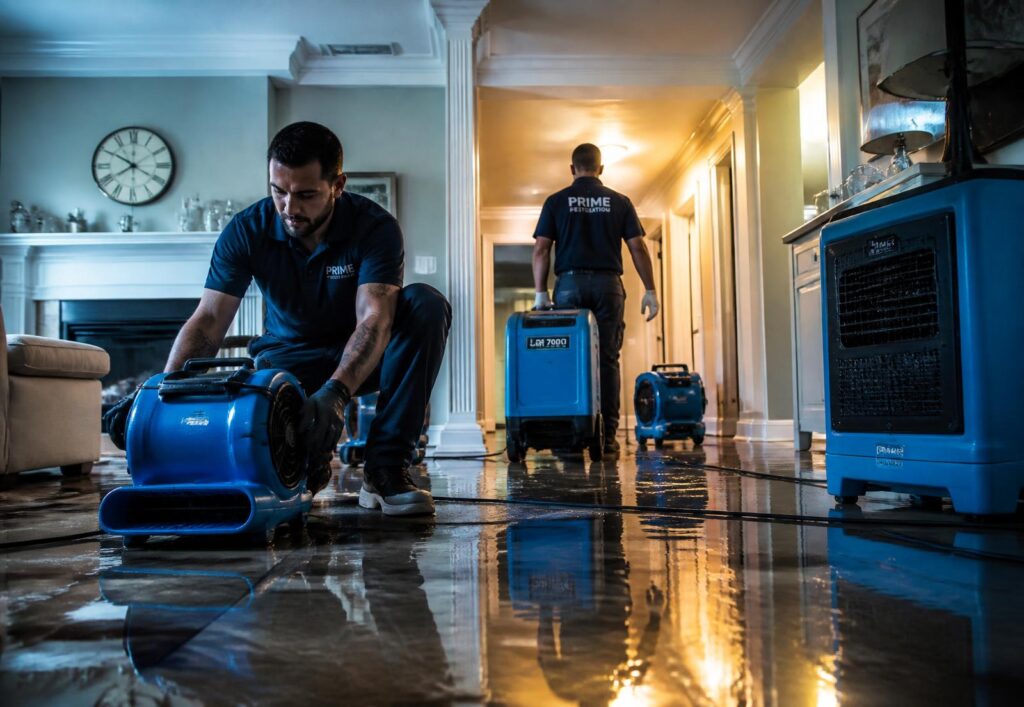
NorthStar’s current emergency-water content describes extraction followed by structural drying, cleaning, sanitization, odor control, and repair where required. It also describes the use of moisture-detection tools and drying equipment to determine whether affected areas have reached appropriate moisture targets.
This distinction is important because a property can look dry while moisture remains in concealed locations.
When Professional Drying Is Necessary
Drying decisions should be based on the condition of the affected materials, not simply on how the room looks or how many days have passed.
A professional assessment can identify:
- Moisture inside wall assemblies
- Wet flooring or subfloor materials
- Moisture behind cabinets
- Damp insulation
- Hidden water around plumbing penetrations
- Areas with elevated humidity
- Materials that may be restorable versus those that require removal
BELFOR’s current water-restoration material similarly emphasizes extraction, decontamination, drying, contamination level, and the condition of affected property when determining the proper recovery approach.
Structural Drying and Moisture Control
Structural drying is designed to bring affected materials and indoor conditions back toward acceptable moisture levels while reducing the risk of secondary damage.
NorthStar states that its restoration process can include professional drying equipment, moisture meters, air movers, and dehumidifiers depending on the project. Its broader emergency-water page describes inspection, extraction, drying and dehumidification, cleaning, and final restoration as connected stages.
The purpose is not simply to run equipment. The team should understand:
- Where the water traveled.
- Which materials were affected.
- How much moisture remains.
- What areas need monitoring.
- Whether materials can be dried or should be removed.
- When the structure is ready for the next stage of repair.
Basement Water Damage in Eagle River
Basements can be especially challenging because water may enter below grade, travel through porous materials, or remain hidden around walls and flooring.
A basement loss can involve:
- Standing water
- Wet flooring
- Damp drywall
- Insulation exposure
- Foundation-related moisture
- Failed sump-pump systems
- Plumbing leaks
- Stormwater intrusion
- Persistent humidity
NorthStar’s Eagle River page specifically identifies basement water damage as a local service need and connects the response with leakage control, restoration, and mold prevention.
For a detailed internal resource, use NorthStar’s emergency water damage restoration service as the primary supporting link.
Flood and Storm-Related Water Damage
Floodwater should not automatically be treated the same way as a clean plumbing leak.
The source and quality of the water can affect the required safety precautions, cleaning scope, contents decisions, material removal, and restoration process.
NorthStar’s broader emergency-water service identifies flood cleanup as a dedicated restoration category, while its Eagle River page specifically discusses residential storm and flood events.
For severe weather events, the recovery may involve more than extraction. It can include debris removal, sanitation, affected-material decisions, roof or exterior stabilization, drying, and permanent repair.
See NorthStar’s flood damage repair service for additional information.
What to Do After Discovering Water Damage
The safest first actions depend on the cause and the condition of the property.
If the source is a plumbing failure and it is safe to do so, shut off the water supply. If electricity may be involved, avoid entering standing water until the electrical hazard has been addressed.
Then:
- Contact a professional restoration provider.
- Photograph the affected areas when it is safe.
- Keep people away from unsafe sections of the property.
- Avoid using ordinary household equipment to remove large amounts of standing water.
- Do not disturb suspected contaminated materials.
- Contact the insurance carrier when appropriate.
- Keep records of visible damage and emergency actions.
ServiceMaster Restore also advises homeowners to shut off the water source when appropriate, contact their insurer, document damage with photographs, and avoid unsafe electrical conditions around standing water.
Insurance and Water Damage Restoration
Property owners often have two parallel priorities after a loss: restoring the building and understanding the insurance claim.
A restoration provider can help by documenting conditions, recording the work performed, preparing estimates or project information, and communicating about restoration activities. Insurance coverage itself depends on the policy, cause of loss, exclusions, deductibles, and the carrier’s claim determination.
NorthStar’s Eagle River page specifically says its team can assist property owners with navigating the insurance-claim process.
The important distinction is that restoration professionals document and perform the work; the insurer determines coverage under the applicable policy.
Water Damage Restoration Process in Eagle River
A strong local restoration process should be easy for a homeowner to understand.
Step 1: Emergency Contact
Call NorthStar as soon as the situation is safe to report. Explain the type of loss, approximate affected area, whether standing water remains, and whether anyone is still inside.
Step 2: Property Assessment
The restoration team evaluates the source, affected materials, visible damage, moisture conditions, safety concerns, and likely scope. NorthStar's current Eagle River process identifies damage assessment as the second stage after emergency contact.
Step 3: Water Extraction and Mitigation
Standing water is removed and immediate steps are taken to limit additional damage.
Step 4: Drying and Cleaning
Affected areas are dried using professional equipment and monitored as appropriate. Cleaning and sanitization may be required depending on the source and category of the water.
Step 5: Documentation
The project scope, affected areas, equipment, photos, measurements, and work performed should be documented so property owners and relevant insurance stakeholders have a clear record.
Step 6: Repair or Reconstruction
Once emergency mitigation is complete, damaged building components can be repaired or rebuilt.
Step 7: Final Inspection
NorthStar's Eagle River page identifies a final walkthrough as the final stage of its stated process, intended to confirm that the project meets safety and quality expectations.
These qualities ensure reliable mold damage restoration services.
Proudly Serving Central Wisconsin
Residential and Commercial Property Recovery
The same underlying water event can create very different challenges depending on the property.
For a residence, priorities may include protecting family living areas, furniture, flooring, personal belongings, and safe occupancy.
For a business, recovery may also involve tenant coordination, inventory, customer areas, equipment, employee access, and operational continuity.
NorthStar’s emergency restoration information states that it serves both residential and commercial properties and can address water extraction, structural drying, cleanup, reconstruction, and related emergency needs.
That makes the Eagle River page relevant to homeowners, landlords, property managers, and businesses looking for a single restoration partner.
Mold Risk After Water Damage
Mold is not an automatic result of every water event, but unresolved moisture can create conditions where microbial growth becomes a concern.
The practical priority is to identify and control the moisture source, dry affected materials, and determine whether contaminated or unsalvageable materials need removal.
NorthStar maintains a dedicated mold remediation service and a separate mold damage restoration page that can support this topic without overloading the Eagle River page.
Why Choose NorthStar in Eagle River?
A useful local restoration provider should offer more than a phone number.
Homeowners and businesses should be able to evaluate:
- Emergency availability
- Relevant technical experience
- Equipment and drying capability
- A documented process
- Communication throughout the project
- Repair and reconstruction support
- Insurance-related documentation
- Local service coverage
NorthStar’s current Eagle River page highlights certified experts, 24/7 availability, modern equipment, local Eagle River positioning, 4.9/5 based on 312+ reviews displayed on the page, and a documented four-step process.
NorthStar’s broader site also states that the company is IICRC certified and provides emergency restoration for water, fire, mold, storms, sewage and related property losses.
These concrete service attributes are more useful than unsupported claims about being the “best” company.
Local Service for Eagle River Property Owners
The Eagle River page is designed to serve the local search intent around property water losses while connecting the location page to NorthStar’s broader service ecosystem.
Useful supporting resources include:
Emergency Water Damage Restoration for the full emergency process.
Flood Damage Repair for storm and flood-related recovery.
Mold Remediation for moisture-related microbial concerns.
Contact NorthStar Restoration Services for emergency or non-emergency inquiries.
Frequently Asked Questions!
As soon as it is safe to do so. Early assessment can help identify the active source, standing water, hidden moisture, and immediate mitigation priorities.
Yes. NorthStar’s Eagle River page states that emergency service is available 24/7.
Yes. Moisture can move behind walls, underneath flooring, around cabinets, inside insulation, or into other concealed building assemblies.
Not necessarily. Extraction removes visible or accessible water, but affected materials may still require controlled drying, moisture monitoring, cleaning, and repair.
Coverage depends on the policy and the cause of the loss. Sudden and accidental water events may be treated differently from long-term seepage, maintenance-related damage, or excluded causes. The insurance carrier makes the coverage determination.
Sometimes, but it depends on safety, affected areas, contamination, utilities, access, and the nature of the work. The restoration team should explain any occupancy restrictions before work begins.
Floodwater may require additional safety and cleaning measures depending on its source and level of contamination. A professional assessment should determine the appropriate handling and material-removal strategy.
No. Depending on the material, contamination, condition, and drying response, some materials may be restorable while others may require removal.
NorthStar’s Eagle River page states that its team can help property owners navigate the insurance-claim process. The company can document restoration work, while the insurance carrier determines coverag
There is no single timeline. Duration depends on the source and severity of the loss, materials affected, drying requirements, access, contents, repairs, and whether reconstruction is needed.