
NorthStar Restoration Services
Biohazard Cleanup in Wausau, WI for Safe, Discreet Recovery
Protecting Your Property & Well-Being
When blood, bodily fluids, trauma residue, or another potentially hazardous substance affects a home or business, Biohazard Cleanup should begin with safety, controlled access, and a clear plan. NorthStar Restoration Services serves Wausau and Central Wisconsin with 24/7 emergency response for sensitive contamination events, including trauma, crime scenes, unattended deaths, accidents, and other situations that require specialized cleaning.
NorthStar’s About page says its team is trained and certified for trauma and crime scene work as well as biohazard and hoarder work, and it reports more than 100 years of combined restoration experience. The company is based at 4900 Stewart Ave in Wausau.
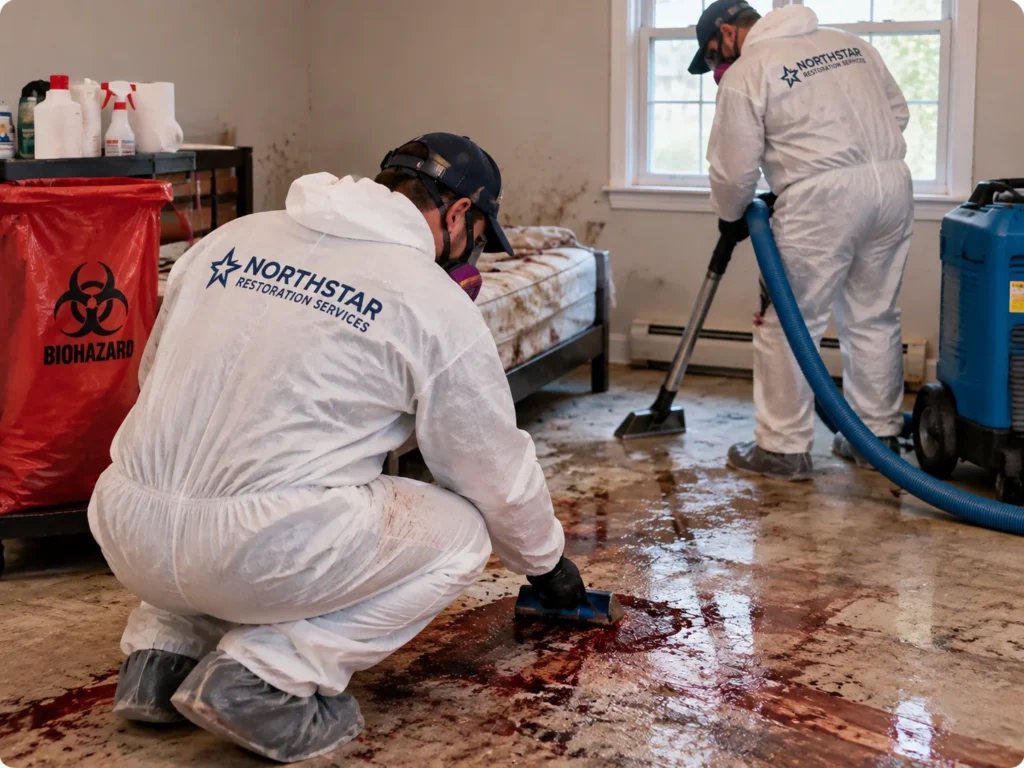
Biohazard Cleanup is more than ordinary deep cleaning. A professional response can include a site assessment, controlled work zones, removal of affected materials, cleaning, disinfection, deodorization, regulated material handling, documentation, and a final review based on the conditions found at the property.
What Situations Require Specialized Help?
Some incidents create contamination that should not be treated like a normal household mess. Professional biohazard cleaning may be appropriate after a traumatic event, accident, death, blood spill, sewage incident, or other situation where potentially infectious material or hazardous residue is present.
Common situations include:
- crime scene cleanup after law enforcement has released the affected area
- trauma scene cleanup after an accident or medical emergency
- unattended death cleanup when decomposition has affected building materials or contents
- suicide cleanup requiring privacy, compassion, and controlled handling of affected materials
- blood cleanup services when blood has reached flooring, furniture, wall materials, or hidden areas
- bodily fluid remediation for contamination involving other potentially infectious material
- infectious disease cleanup when a qualified response is appropriate for the site and contamination involved
- hoarding remediation when clutter is combined with biological waste, pests, mold, or unsafe materials
- hazardous material cleanup when the substance and applicable regulations are within the restoration provider’s scope
NorthStar also maintains a dedicated hoarder and crime scene service page for situations where clutter, trauma, or sensitive scene conditions overlap.
What Should You Do Before a Cleanup Team Arrives?
If someone is injured, in danger, or needs medical help, call emergency services first. If a crime or death investigation is active, wait until law enforcement or the appropriate authority releases the scene before restoration work begins.
Keep children, pets, employees, tenants, and unnecessary visitors out of the affected area. Do not pick up needles, broken glass, or other sharp objects by hand, and avoid moving porous items through clean areas if they may be contaminated.
OSHA’s bloodborne-pathogen rule requires universal precautions for occupational exposure and specifies worker protections such as appropriate personal protective equipment, decontamination of affected work surfaces, and safe handling of contaminated sharps. It also requires qualifying sharps containers to be puncture resistant, leak resistant, closable, and appropriately marked.
These requirements apply to covered employers and occupational exposure, but they also show why uncontrolled handling of blood, potentially infectious material, and sharp objects can create unnecessary risk.
What Does Professional Biohazard Cleanup Include?
The exact scope depends on what happened, how far contamination traveled, which materials were affected, and whether law enforcement, a property manager, an insurer, or another party is involved.
1. Site Assessment and Work-Zone Planning
The team first determines what areas are affected, what can be accessed safely, and which surfaces or contents may require removal or treatment. This contamination assessment helps define the project before materials are disturbed.
Where appropriate, containment barriers can help separate the work zone from unaffected parts of the property and reduce unnecessary movement through the scene.
2. Controlled Removal of Unsalvageable Material
Porous materials can sometimes absorb contamination below the visible surface. Carpet pad, certain upholstered materials, drywall, subflooring, or other items may require removal when they cannot be effectively restored.
Handling of regulated waste depends on the material, the work setting, and applicable federal, state, and local requirements. The cleanup plan should distinguish ordinary debris from items that require controlled packaging, transport, or hazardous waste disposal.
For Wisconsin-specific context, the Wisconsin Department of Natural Resources distinguishes among sharps, bulk blood or body fluids, human tissue, and other waste types. The DNR also explains that businesses and institutions have different infectious-waste obligations from households, while household sharps must be kept separate from ordinary trash.
That distinction matters because disposal decisions should be based on the actual material, who generated it, and the rules that apply to the situation.
3. Cleaning Before Disinfection
Visible soil and organic material should be addressed before the disinfection step. This is one reason biohazard decontamination is a process rather than a single spray-and-wipe action.
For bloodborne-pathogen applications, EPA maintains a current list of EPA-registered disinfectants with label claims against HIV, hepatitis B, and hepatitis C. EPA instructs users to follow the product label and the required contact time for the target pathogen.
4. Disinfection and Surface-Specific Treatment
After physical soil is removed, biohazard disinfection should use products and methods appropriate for the material and contamination involved. The OSHA bloodborne pathogens standard requires contaminated work surfaces to be decontaminated after contact with blood or other potentially infectious materials in covered workplaces.
The method should account for whether a surface is hard and nonporous, porous, finished, unfinished, absorbent, or damaged. A product suitable for one surface or pathogen claim is not automatically suitable for every situation.
5. Odor and Residual Condition Review
Some incidents leave persistent odors even after visibly affected material has been removed. Odor removal should focus on the source and affected material rather than simply masking the smell with fragrance.
When a scene involves decomposition, sewage, or deeply affected porous materials, the restoration plan may need additional cleaning, removal, or specialty treatment before reconstruction can begin.
6. Final Cleaning, Documentation, and Handoff
The last stage may include biohazard sanitization, a review of treated and removed materials, project photographs or records, and recommendations for repair work that remains.
The objective should be documented completion of the agreed scope based on site conditions, applicable procedures, and product directions rather than an unsupported promise that every possible microorganism has been eliminated.
Why Blood and Bodily Fluids Require Special Handling
Blood and certain other bodily fluids may contain bloodborne pathogens, which means they should not be treated as ordinary household contamination. Professional bloodborne pathogen cleanup requires proper safety procedures, controlled handling, appropriate protective equipment, and specialized cleaning methods.
The Occupational Safety and Health Administration (OSHA) outlines important safety requirements for handling exposure to blood and other potentially infectious materials, including the use of protective measures, workplace controls, and proper decontamination procedures. You can review the official OSHA bloodborne pathogen safety guidelines for additional information.
Professional cleanup also requires more than simply removing visible stains. Contamination may affect porous materials, flooring, furniture, walls, and hidden areas. A proper biohazard remediation process may include contamination assessment, containment, removal of affected materials, cleaning, disinfection, deodorization, and final documentation.
The effectiveness of disinfection depends on selecting appropriate products and following manufacturer instructions. The EPA registered disinfectant guidance provides information about registered disinfectants and proper label-use requirements.
Property owners should avoid disturbing serious contamination without proper knowledge and protection. Professional biohazard decontamination helps reduce exposure risks while ensuring affected areas are handled according to appropriate safety practices.
When Do You Need Emergency Biohazard Cleanup?
Urgent response is appropriate when contamination is actively exposing occupants, affecting a large or shared area, producing strong decomposition conditions, involving a business that must restrict access, or creating another condition that cannot reasonably wait for a routine appointment.
For non-life-threatening contamination, keep people out of the area and contact a qualified restoration provider. NorthStar’s contact page lists (866) 439-9318 as its emergency service number and 4900 Stewart Ave, Wausau, WI 54401 as its business address.
For a non-emergency project, use NorthStar’s request an estimate page rather than entering or disturbing the affected area unnecessarily.
How Are Different Biohazard Scenarios Handled?
No single cleaning method fits every incident. The material, source, surface type, exposure risk, building use, and investigation status all change the response.
Situation | Main concerns | Typical restoration focus |
Trauma or accident | Blood, fluids, sharps, damaged finishes | Secure area, remove affected material, clean, disinfect, document |
Unattended death | Decomposition fluids, odor, porous materials | Source removal, deep cleaning, material evaluation, deodorization |
Crime scene | Biohazards plus investigative residues | Wait for scene release, assess, clean, restore affected materials |
Hoarding with contamination | Waste, clutter, pests, mold, limited access | Sorting strategy, hazard removal, sanitation, repair planning |
Workplace incident | Exposure control, employee access, downtime | Controlled work zones, documentation, coordinated reopening |
Sewage-related contamination | Wastewater, porous material exposure, moisture | Water removal, contaminated-material handling, drying, disinfection |
When sewage is part of the loss, NorthStar’s Wausau sewage cleanup service is a more specific internal resource than treating the incident as generic biological contamination.
What Can Be Saved and What May Need Removal?
Salvage decisions depend on material type, penetration, damage, contamination, sentimental or financial value, and whether the item can be treated using an appropriate method.
Hard, nonporous items may offer more cleaning options than absorbent materials. Carpet pad, unfinished wood, mattresses, some upholstered items, and heavily affected wall assemblies can be more difficult because contamination may migrate below the visible surface.
A professional contaminated property cleanup plan should document what is being cleaned, what is being removed, and why. That distinction is especially useful for homeowners, property managers, and insurers reviewing the project later.
Residential and Commercial Projects Need Different Planning
A home response often prioritizes privacy, family access, belongings, and the emotional sensitivity of the incident. A residential response in Wausau should therefore include clear communication about which rooms are restricted, what personal items can be evaluated, and when other repairs can begin.
Commercial Biohazard Cleanup may need additional coordination around employees, customers, tenants, security, business continuity, incident reporting, and access control. NorthStar maintains a dedicated commercial biohazard service for businesses and institutional properties.
For larger facilities, commercial decontamination may also require phased work so unaffected spaces can remain separate from the treatment area when conditions and regulations allow.
How Does Insurance Work for a Biohazard Loss?
Coverage varies. A policy may treat an accidental loss, crime-related event, sewage incident, unattended death, or other cause differently, and exclusions or deductibles can change the outcome.
NorthStar currently states that it offers direct insurance billing and works directly with insurance companies. Insurance claim assistance from a restoration provider can include photographs, scope documentation, estimates, invoices, and communication about the work performed, but the insurer determines what the policy covers.
Avoid assuming that a policy covers the work until the actual policy and claim are reviewed. For the property owner, the safer approach is to document the scene when permitted, notify the insurer, and keep records of emergency and restoration work.
Unattended Death & Suicide Cleanup
These situations are emotionally heavy. You need a compassionate team that understands the sensitivity involved. We clean, sanitize, and restore the space with care and respect.

Situation assessment

Removal of biohazards

Area disinfection
How Much Does This Type of Cleanup Cost in Wausau?
There is no responsible flat price for every incident. Cost depends on the size of the affected area, type of contamination, materials involved, access, required PPE, amount of removal, waste handling, deodorization, reconstruction needs, after-hours response, and documentation requirements.
A single hard-surface incident is different from a multi-room trauma scene or decomposition loss affecting subflooring and wall cavities. NorthStar’s estimate form is the appropriate path for planned work, while the emergency line is intended for urgent conditions.
Why Choose NorthStar Restoration Services?
NorthStar’s About page states that the company is based in Wausau and that its team has more than 100 years of combined experience. The same page says the team is trained and certified to help with trauma and crime scenes, biological hazards and hoarding, water and sewer losses, mold, fire and smoke, structural repair, and storm damage.
NorthStar’s current homepage also identifies the company as IICRC Certified and fully insured, with 24/7 emergency availability.
That broader restoration capability matters because biohazard remediation can lead to flooring, drywall, contents, odor, water, mold, or reconstruction work after contaminated materials are removed.
The service should also be discreet. Sensitive events can involve grief, family members, employees, tenants, law enforcement, or neighbors. Professional communication should limit unnecessary detail and focus on access, safety, scope, and next steps.
Frequently Asked Questions!
For a tiny incidental spot with no occupational or crime-scene context, homeowners may choose ordinary cleaning precautions. A larger spill, unknown source, sharp hazard, trauma scene, or contamination that has reached padding or subflooring is different.
Do not handle needles or broken contaminated glass by hand. OSHA requires mechanical means rather than direct hand pickup for contaminated broken glass in covered workplaces.
Cleaning physically removes soil and organic material. Disinfection uses a product with label directions for specific microorganisms and surfaces.
EPA notes that disinfectant effectiveness depends on using the product according to its label, including the specified wet contact time.
Yes. Restoration work should not interfere with an active investigation. Wait until law enforcement or the responsible authority has released the affected area before trauma cleanup services begin. Competitor guidance follows the same post-investigation sequence.
Items are evaluated based on material, penetration, condition, and whether an appropriate cleaning method can reach the affected area.
Some materials can be treated. Others may need removal if contamination has penetrated beyond a restorable surface.
No. Decontamination services should be tailored to the source, affected material, building use, exposure pathway, and applicable rules.
A blood spill, decomposition loss, sewage event, chemical residue, and hoarding environment can require different controls.
NorthStar’s published services include structural repair and remodeling in addition to specialty cleaning. When removal leaves damaged flooring, drywall, trim, or other building materials, biohazard restoration can transition into repair planning after the contaminated portion of the project is complete.
Not every private household incident creates the same legal requirement. OSHA’s bloodborne-pathogen rules apply to covered employers and occupational exposure, while Wisconsin waste requirements vary according to the material and generator.
For a complex or high-risk incident, use a qualified provider that understands which requirements apply to the specific job.
Proudly Serving Central Wisconsin
Schedule Biohazard Cleanup in Wausau, WI
If a sensitive contamination event has affected your home, rental, workplace, or commercial property, keep unnecessary people out of the area and get qualified help before disturbing the scene.
NorthStar Restoration Services lists 24/7 emergency response for urgent losses. Call (866) 439-9318 for emergency service, or use the NorthStar contact page for a non-emergency request.