


After bad weather, your first move should protect your family. You should check for leaks, broken glass, and unsafe power risks. A storm damaged repairs can leak before the damage looks serious. Blown-off shingles, wet floors, and stains on ceilings and walls need fast attention. NorthStar Restoration Services helps Wausau and Central Wisconsin homeowners recover with safe, trained cleanup support.
Why Should Storm Damage Repairs Start Right Away?
Storm cleanup should never wait when water enters your home. I have seen one small roof leak stain drywall overnight. I have also seen wet insulation create a strong musty odor fast. A storm damaged roof can let water move through attic spaces, ceiling panels, wall cavities, and flooring. You may only notice a small brown mark at first. Still, that mark can point to a bigger moisture problem above the room.
Start with safety, photos, and moisture control. Check your yard for blown-off shingles, broken gutters, loose siding, and fallen branches. Look inside for wet carpet, soft drywall, and stains on ceilings and walls. You should drain standing water only when the area feels safe. Then you should dry out wet areas before odor or mold risk grows. NorthStar can provide safe storm cleanup and repair support when your home needs urgent care.
What Steps To Take After A Storm Help Protect Your Home?
The right steps to take after a storm help you avoid panic. You should slow down and check your home in a careful order. Storm damage repairs work best when you protect people first, document everything, and stop water from spreading. This matters a lot after heavy rain, hail, high winds, or falling branches. In my experience, homeowners often miss hidden damage because they clean too fast.
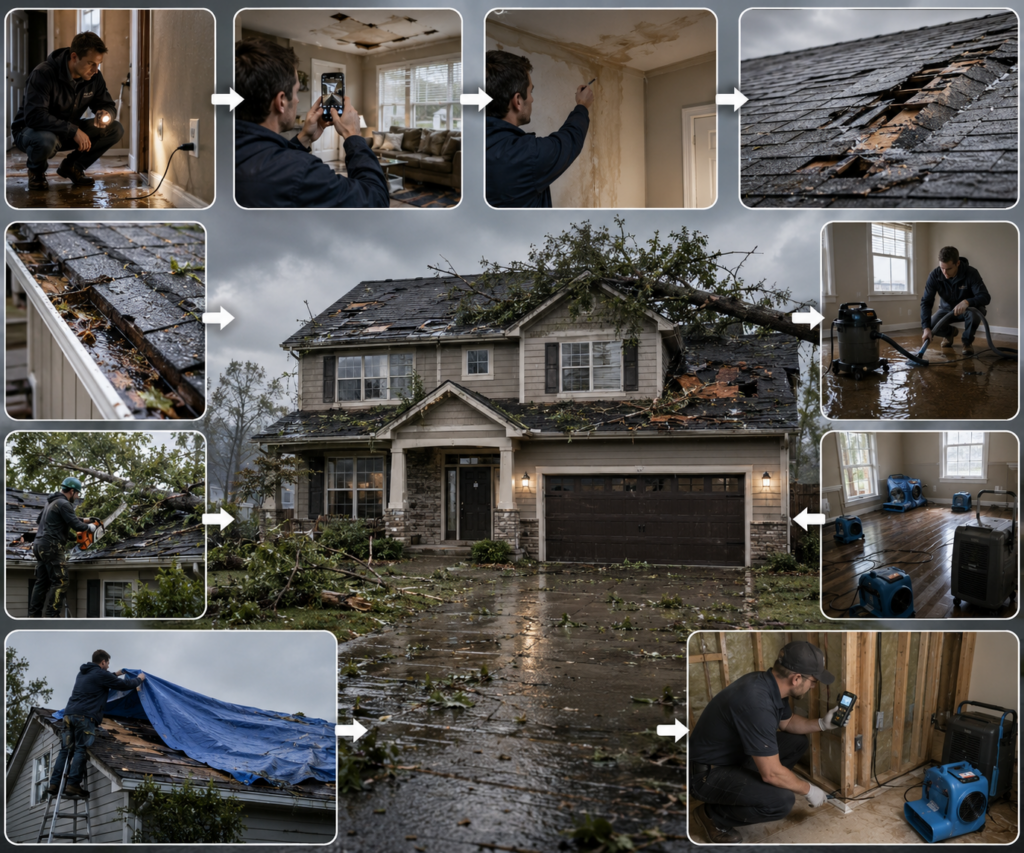
Use this simple checklist:
- Safety Check: Stay away from water near outlets.
- Photos First: Document every damaged room and surface.
- Storm damaged roof: Watch for leaks and missing materials.
- Blown-off shingles: Check gutters, yard areas, and roof edges.
- Stains on ceilings and walls: Mark new wet spots quickly.
- Drain standing water: Remove it only when conditions are safe.
- Dry out wet areas: Start airflow after water removal.
- Use a tarp on roof: Cover exposed spots with caution.
- Remove debris from roof: Avoid risky ladder work.
If water gets inside, professional water damage restoration can protect hidden spaces. Fast drying helps reduce mold risk, floor damage, and wall damage.
How Can You Find Signs Of Potential Storm Damage?
You can find signs of potential storm damage with a slow walk around your property. This helps you know when storm damage repairs need urgent help. Start outside before you move inside. Look at your roofline, siding, windows, vents, gutters, downspouts, and yard. Then check ceilings, walls, attic spaces, basement floors, and storage areas. Do not rush this part. Small clues often show where water entered.
Do not climb a wet roof after a storm. Take photos from the ground instead. If you need to drain standing water, check for power risks first. If your basement has water, quick water removal service can help limit deeper damage.
| Area To Check | What You May Notice | What It May Mean |
| Roof | Blown-off shingles | Wind lifted roof materials |
| Ceiling | Stains on ceilings and walls | Water entered from above |
| Basement | Standing water | Drainage or seepage failed |
| Attic | Wet insulation | Roof leaks may be active |
| Gutters | Granules or debris | Shingles may have storm wear |
| Roof Edge | Branches or limbs | You may need to remove debris from roof |
A storm damaged roof may show lifted shingles, loose flashing, exposed underlayment, or missing roof materials. Blown-off shingles may sit near your driveway, lawn, or gutters. Stains on ceilings and walls may point to water entry above the room. Standing water may also mean drainage failed near your home. If you see damp carpet, warped trim, or a musty smell, moisture may already sit under the surface.
How Should Storm Damage Repairs Begin Safely?
Start with a safe plan before cleanup begins. Keep children and pets away from wet rooms. Stay out of spaces with sagging ceilings, soft floors, or exposed wiring. Avoid water near cords, outlets, appliances, or breaker panels. Storm water can carry dirt, debris, and unsafe materials. You should not treat every puddle like clean rainwater.
Follow this cleanup order:
- Secure Safety: Block risky rooms first.
- Document Damage: Take photos and short videos.
- Stop More Water: Use a tarp on roof safely.
- Control Moisture: Drain standing water carefully.
- Start Drying: Dry out wet areas quickly.
- Limit Debris: Remove debris from roof only safely.
- Call Help: Bring in trained restoration support.
In my expert opinion, guessing wastes valuable time. Towels and fans may dry the surface only. They may not reach wet insulation, subfloors, wall cavities, or baseboards. A trained crew can check hidden moisture with proper tools. That helps reduce odor, mold concerns, and repeat damage after the first cleanup.
What Should You Know About A Storm Damaged Roof?
A storm damaged roof can look small from the ground. One missing shingle can still allow water inside. Once water enters, storm damage repairs may need drying, cleanup, moisture checks, and repair planning. You may not see the full problem right away. Water can travel along rafters before it drips into a room.
If it is safe, use a tarp on roof to cover exposed areas. Do not walk on wet shingles. Do not nail into weak decking. Do not pull off materials before taking photos. If you see blown-off shingles, leaks, or ceiling stains, call trained help. Fast attention can protect your attic, drywall, flooring, and personal items from more damage.
What Do Homeowners Ask After Severe Weather?
How soon should I act after storm damage?
You should act once the area feels safe. Fast action lowers water spread, mold risk, and repair costs. You should take photos before major cleanup starts.
What are common signs of potential storm damage?
Common signs include blown-off shingles, roof leaks, damp rooms, and stains on ceilings and walls. You may also see cracked siding, dented gutters, or wet insulation.
Should I drain standing water myself?
You can drain standing water if it looks safe. Avoid water near outlets, sewage, appliances, or damaged wiring. Call trained help if the water looks dirty or deep.
Can I dry out wet areas by myself?
You can dry out wet areas when moisture is light and easy to reach. Deep moisture often needs professional drying tools. Hidden dampness can stay under floors and behind walls.
Should I use a tarp on roof after damage?
You can use a tarp on roof if the area is safe. Do not climb during rain, wind, or poor footing. Call a professional if the roof looks unstable.
Why Should You Call NorthStar After Severe Weather?
You should not face cleanup alone after harsh Wisconsin weather. NorthStar Restoration Services helps with storm damage repairs, storm damaged roof concerns, drain standing water needs, dry out wet areas support, and moisture checks. You get fast, respectful help from trained restoration professionals. Our team understands local storms, heavy rain, wind damage, and emergency property cleanup.
Call NorthStar Restoration Services today when your home needs safe storm cleanup. We proudly serve Wausau and Central Wisconsin with family-focused restoration care. You can call anytime for emergency help, clear guidance, and a safer recovery plan.
- Website Name: NorthStar Restoration Services
- Address: 4900 Stewart Ave, Wausau, WI 54401
- Phone: (866) 439-9318