

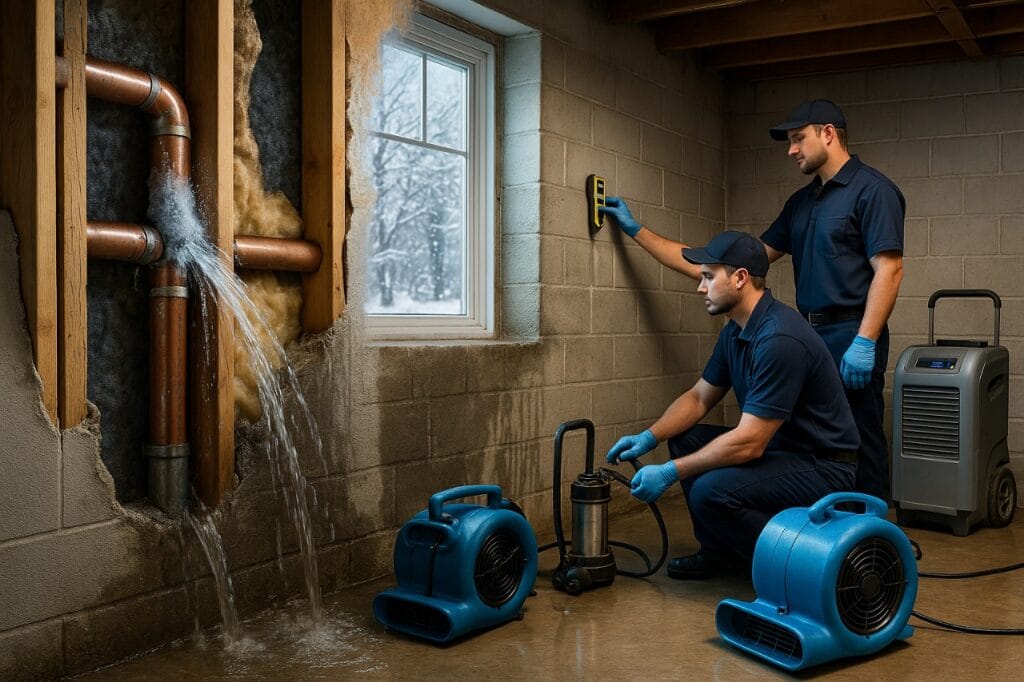
Frozen pipes are one of the most disruptive and stressful winter home emergencies. When temperatures drop, water inside plumbing can freeze, expand, and eventually burst through the pipe wall. What begins as a small crack can quickly release hundreds of gallons of water into a home, damaging belongings, flooring, insulation, and structural elements. In moments like these, understanding how emergency water mitigation works—and the science behind structural drying—makes it easier to respond quickly and confidently.
Effective mitigation isn’t just about stopping the leak. It requires a blend of fast decision-making, moisture science, airflow management, and controlled drying. This article explores the essential steps professionals take, the physics behind water migration, and what homeowners can expect when dealing with frozen pipe damage.
Understanding How You Can End Up With Frozen Pipes in the First Place
Pipes freeze when the surrounding temperature dips below freezing long enough for water inside to solidify. Water expands as it becomes ice, and that expansion creates tremendous pressure within the pipe. Contrary to popular belief, the break often doesn’t occur where the ice forms, but rather in a vulnerable area farther down the line where pressure accumulates.
Homes with insufficient insulation, unheated utility rooms, or drafty crawlspaces are especially prone to freezing. Even a small air leak through siding or a basement window can funnel cold air directly onto a pipe, allowing ice to form.
What Happens When a Pipe Bursts
Once a pipe ruptures, liquid water begins flooding the surrounding structure. Unlike a slow leak that reveals itself gradually, a burst pipe can cause instant, visible destruction. Walls soak up water like a sponge, flooring delaminates, electrical systems become compromised, and insulation loses effectiveness.
The danger is not just the initial soaking. Water moves unpredictably, following gravity, capillary action, and building materials’ absorption properties. That means an upper-floor burst can affect rooms far below, and a basement leak can saturate walls throughout the home.
The Importance of Rapid Emergency Mitigation
Time is the most critical factor. The longer moisture sits, the higher the risk of structural damage, microbial growth, swelling wood, and permanent material failure. Immediate mitigation focuses on stopping the source, extracting standing water, and creating an environment where structural drying can begin as soon as possible.
So, you might be wondering, who responds 24/7 to water extraction emergencies near me? Professional responders arrive with pumps, moisture meters, thermal cameras, and high-powered extractors to get ahead of the problem. The goal is not simply to remove visible water but to prevent hidden moisture from turning into long-term damage.
How Water Travels Through a Home’s Structure
Water behaves differently depending on the material it touches. Drywall absorbs quickly and becomes fragile. Insulation traps moisture deep within cavities. Hardwood floors cup or crown as the boards absorb water unevenly. Concrete holds moisture that diffuses slowly.
That is why mitigation experts use moisture mapping. By tracking moisture levels at multiple depths, they can determine where water has migrated, even if those areas appear dry to the naked eye. Mapping ensures that drying efforts target the entire affected area, not just the surfaces that look wet.

The Science Behind Structural Drying
Structural drying is both an art and a science. It relies on manipulating three environmental factors: airflow, humidity, and temperature. Proper airflow lifts moisture off surfaces so it can evaporate. Dehumidifiers remove that vapor from the air. Temperature adjustments accelerate evaporation without damaging materials.
Professionals balance these variables with precision. Too much heat can damage surfaces. Too much air movement can spread contaminants. Too little dehumidification slows drying dramatically. Advanced drying systems continuously monitor conditions to keep the process efficient and controlled.
Why Specialized Equipment Makes a Difference
Removing water from deep within walls, floors, and building cavities requires tools far more powerful than household fans or dehumidifiers. Industrial-grade air movers, desiccant or refrigerant dehumidifiers, and cavity drying systems work together to pull moisture out of materials safely and thoroughly.
Moisture meters measure progress, while infrared cameras identify cold spots that may indicate trapped water. This technology helps professionals determine when materials are fully dry and ensures that no moisture remains hidden. Without these tools, mold growth and structural deterioration can occur long after the initial event seems resolved.
Secondary Damage and Why It Matters
Even after the visible water is gone, secondary damage can escalate quickly. Mold can begin forming within a day or two. Wood may continue to swell for several days if moisture remains trapped. Metal components can corrode. Adhesives in flooring products may weaken.
Thorough drying prevents these issues from developing. Homeowners sometimes underestimate how much moisture remains hidden after a burst pipe, especially if they extract water themselves and assume the problem is solved. Understanding the science behind secondary damage highlights why professional oversight is essential.
Winter Moves and Frozen Pipe Risks
Homeowners preparing for a major transition, especially when planning on moving homes during the winter months, often deal with an increased risk of frozen pipes. Cold days can drop indoor temperatures quickly, and an empty home becomes even more vulnerable when heating runs inconsistently, exterior doors don’t seal well, or faucets remain unused long enough for water to freeze.
At the same time, planning with winter conditions in mind makes the process of relocating during colder months easier. Therefore, stay updated with the latest weather forecasts so you can adjust your moving timeline before temperatures fall sharply. Pack essential emergency supplies—such as blankets, flashlights, and ice melt—to handle unexpected delays. Wear appropriate attire for winter moving since you will move between warm and cold areas throughout the day. Hire professional help when needed because experienced crews know how to protect fragile items and maintain a steady flow of work even when conditions are harsh.
Also, while you focus on the logistics, take steps to safeguard the property itself. Insulate exposed plumbing, monitor indoor temperatures, and drain unused water lines before leaving the home unattended. These habits prevent frozen pipes and offer a smoother, safer introduction to your new space.
Steps Homeowners Can Take While Waiting for Help
While professional mitigation is essential, there are actions homeowners can take safely before help arrives. Shutting off the main water supply stops additional flooding. Opening cabinet doors around sinks helps warm air reach vulnerable pipes. Adjusting the thermostat upward keeps indoor temperatures stable enough to prevent further freezing.
It’s important, however, not to remove wet materials or attempt complex drying methods without guidance. Incorrectly handling insulation, wiring, or structural elements can create safety hazards or complicate the restoration process. Simple stabilization steps are often the safest and most effective actions a homeowner can take while awaiting expert assistance.
Rebuilding After the Drying Process
Once structural drying is complete, the restoration phase begins. That can involve repairing drywall, replacing flooring, reinstalling cabinets, and refinishing surfaces. Some materials, such as saturated insulation or damaged laminate flooring, cannot be salvaged. Others may be restored with cleaning, refinishing, and minor repairs.
Professionals document moisture levels and drying progress, ensuring the rebuilt environment is safe, stable, and free from hidden moisture. This documentation is helpful during insurance claims or when selling the home later.
When to Seek Expert Water Mitigation
Homeowners should always seek an emergency response team that treats their home like their own when water affects multiple rooms, saturates structural materials, or originates from pipes that are frozen. Burst pipe events often involve complex moisture migration patterns that require skilled assessment. Experts not only dry the affected areas, but also identify vulnerabilities that may lead to future freezing.
Consulting professionals ensures the home is not only restored but also better protected against another incident. They can recommend insulation upgrades, pipe rerouting, temperature monitoring systems, and other preventive measures.
The Importance of Acting Quickly
Frozen pipes can turn an ordinary winter day into a stressful emergency, but understanding how water mitigation and structural drying work helps restore a sense of control. Acting quickly, assessing moisture thoroughly, and using the right drying techniques are essential steps in preventing long-term damage. With professional guidance, even the most overwhelming burst pipe incident can be resolved safely, efficiently, and with full transparency.
You don’t have to face the aftermath alone. If your home has been affected by frozen pipes or unexpected water damage, the team at NorthStar Restoration Services is ready to help you recover with confidence and care. Reach out today and let trusted specialists restore your home—and your peace of mind.