

Immediate moisture removal prevents mold growth after household water damage incidents. We recommend drying affected areas within 24 to 48 hours to prevent spore formation. Proper ventilation and professional dehumidification are essential for long-term safety. Identifying hidden moisture behind walls ensures mold does not return later. Our Home page guide helps you protect your property and health effectively.
Dealing with Mold After Water Damage in Homes requires quick, decisive action to prevent structural decay. In my 10 years of restoration, I often see the damage spread rapidly if you ignore the early signs. We focus on total elimination rather than just temporary fixes to keep your family safe.
Common Types of Mold After Water Damage in Homes
In my 10 years of restoration, I often see house mold after water damage start quickly. Different water sources lead to different growth patterns in your living space. Clean pipe leaks often trigger light-colored molds like Aspergillus or Penicillium. These species thrive on drywall and insulation in humid conditions. We notice they spread fast if you do not dry the area within two days. High humidity levels act as fuel for these persistent spores.
Contaminated water from outdoor flooding brings more aggressive water damage and mold problems. We frequently identify Stachybotrys, commonly known as black mold, in these cases. This type prefers extremely wet, cellulose-rich materials like wood or paper. It grows slower than other types but poses higher risks. Cladosporium is another common find on carpets and fabrics after a leak. We use specialized testing to identify these specific strains in your home.
Top Five Types for Water Damage Mold Removal
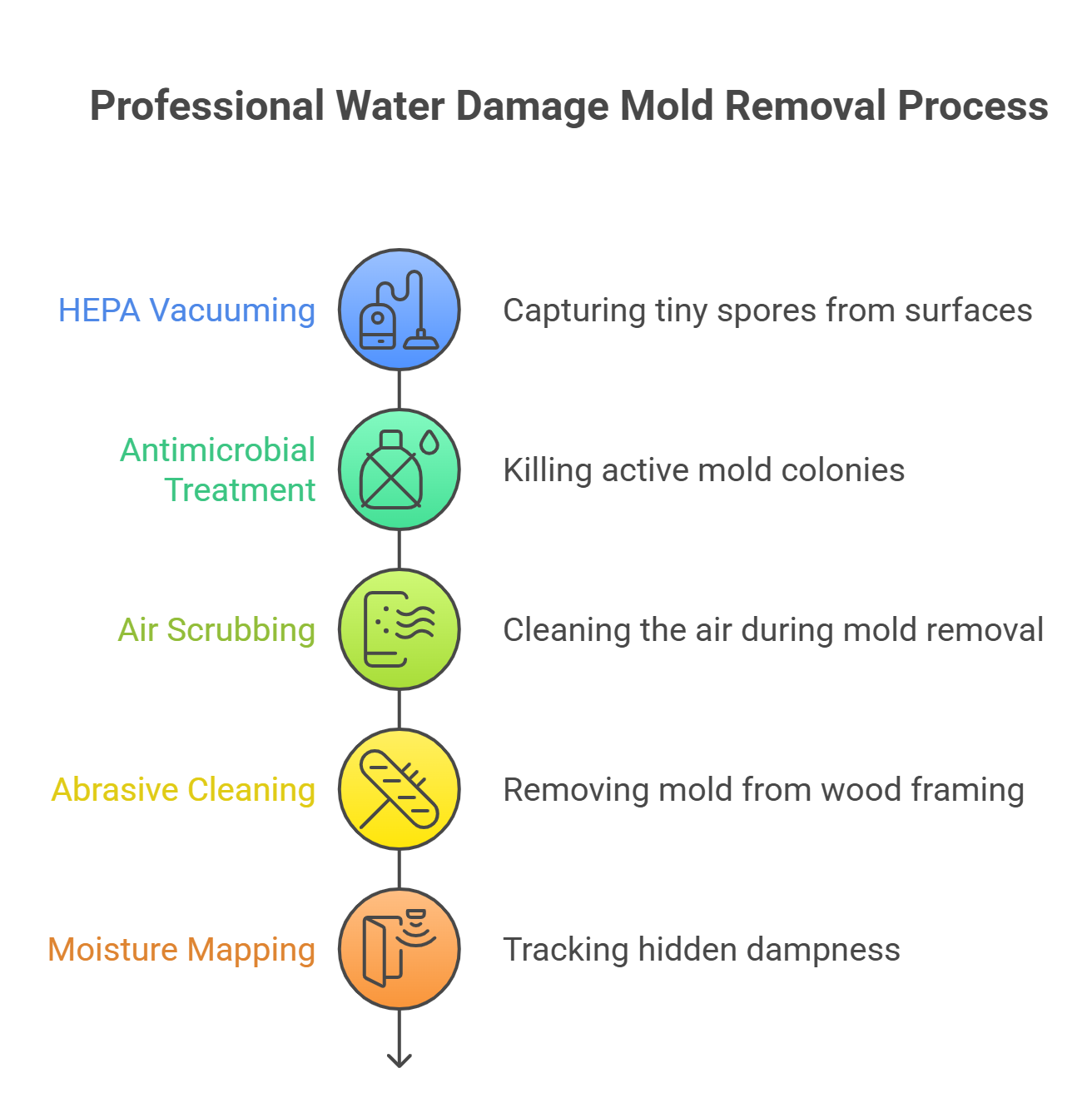
We use specific strategies for water damage mold removal to ensure your home stays safe. Every situation requires a unique approach based on the surface and the mold type. We prioritize methods that stop spores from spreading to clean rooms. My decade of experience shows that professional tools outperform household cleaners every time. We focus on total elimination rather than just surface cleaning.
- HEPA Vacuuming: We use high-efficiency vacuums to capture tiny spores from all surfaces.
- Antimicrobial Treatment: Our team applies hospital-grade solutions to kill active colonies.
- Air Scrubbing: We deploy industrial scrubbers to clean the air while we work.
- Abrasive Cleaning: For wood framing, we use wire brushing or sanding techniques.
- Moisture Mapping: We track hidden dampness using thermal cameras to prevent regrowth.
These professional steps ensure your home returns to a healthy state quickly. We never skip a step because your long-term safety is our main goal. Using the right equipment makes the difference between a temporary fix and a permanent solution.
Signs of Mold After Water Damage to Watch For
You must stay alert for signs of mold after water damage to protect your family. Many indicators are subtle and hide behind your walls or under floorboards. We often find that a musty, earthy smell is the first warning sign. If a room smells damp despite being dry to the touch, mold is likely growing. You should also look for dark spots or fuzzy patches on your ceilings.
Physical health symptoms in your household can also signal house mold after water damage. We see many clients report sudden sneezing, itchy eyes, or skin rashes. These issues often worsen when you spend more time in the affected room. If your allergies flare up only at home, you need a professional inspection. We recommend checking our Events Page for local safety workshops we host in Wausau.
| Sign Category | What to Look For | Risk Level |
| Visible Growth | Black, green, or white patches on walls | High |
| Olfactory | Persistent musty or damp odors | Medium |
| Physical | Sudden respiratory issues or watery eyes | High |
| Structural | Bubbling paint or warped wood trim | Medium |
Proactive Steps: How to Prevent Mold After Water Damage
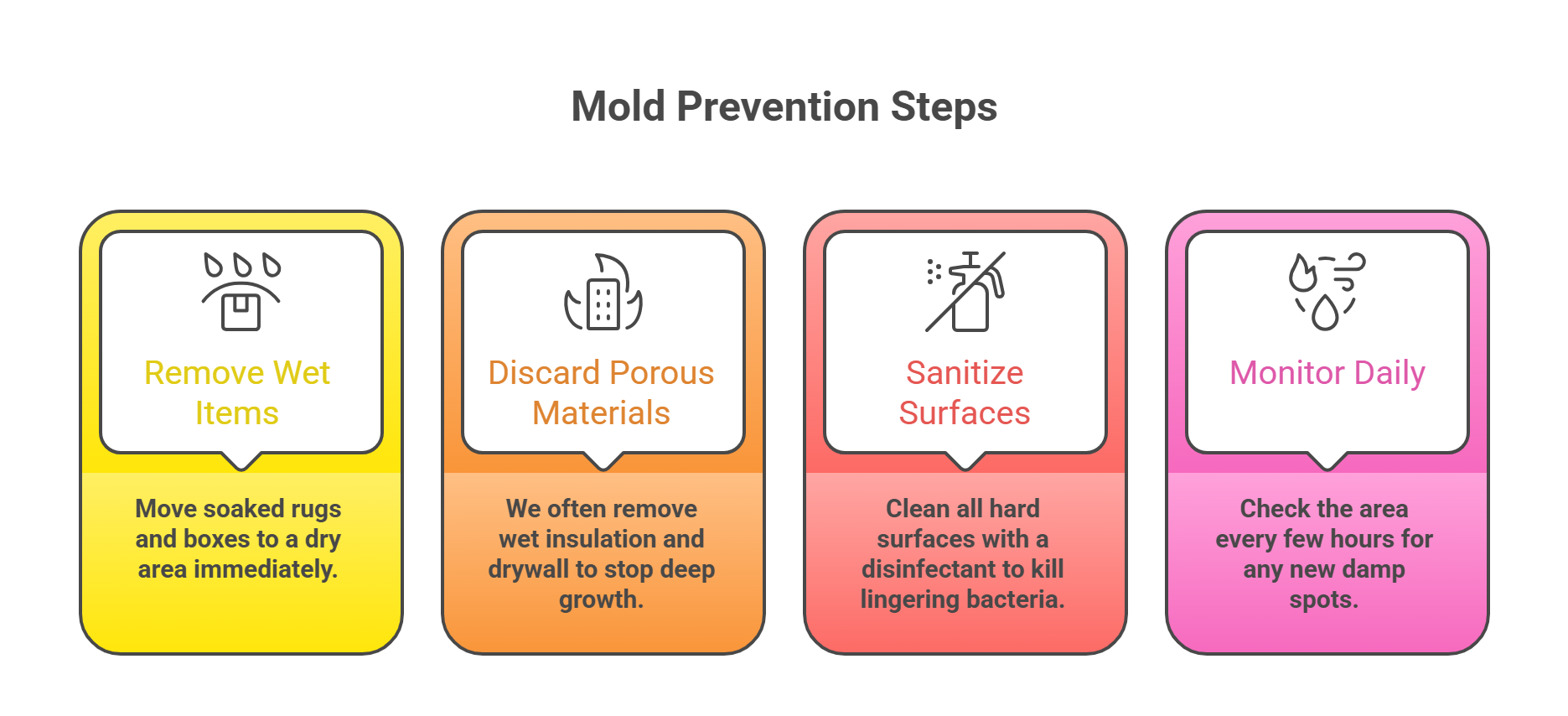
You can learn how to prevent mold after water damage by acting with speed. We start by removing all standing water with industrial pumps and vacuums. Increasing airflow is the next vital step in our professional process. We open windows and use high-speed fans to pull moisture out of the air. Keeping the humidity below 50% stops spores from settling on your furniture.
- Remove Wet Items: Move soaked rugs and boxes to a dry area immediately.
- Discard Porous Materials: We often remove wet insulation and drywall to stop deep growth.
- Sanitize Surfaces: Clean all hard surfaces with a disinfectant to kill lingering bacteria.
- Monitor Daily: Check the area every few hours for any new damp spots.
Taking these fast actions saves you money and protects your property from decay. We suggest visiting our Financing Page if you need help with major restoration costs. Proper prevention is always easier than a massive cleanup later. Our team stands ready to guide you through every step of this urgent process.
How Dangerous Is Mold After Water Damage?
Many homeowners ask how dangerous mold is after water damage during our initial inspections. The truth is that mold can damage both your health and your home’s structure. Spores release mycotoxins that can cause serious respiratory problems over time. Children and the elderly face the highest risks from these invisible airborne particles. We take every growth seriously to keep your environment breathable and safe. Learn more about the risks of mold after water damage and how professional remediation can protect your home and health.
In my 10 years of work, I have seen mold rot through solid wood. It eats away at the organic materials that hold your house together. This structural damage can lead to costly repairs if you ignore the problem. Mold cleanup after flooding is essential to stop this silent destruction. We focus on deep cleaning to ensure your home remains strong for years.
FAQs on Mold After Water Damage in Homes
How long does mold take to grow after a leak?
Mold spores can begin to colonize within 24 to 48 hours. We always urge homeowners to start the drying process immediately.
Can I clean mold with bleach myself?
Bleach often fails to kill mold roots on porous surfaces like drywall. We recommend professionals to remove mold after water damage in homes instead.
Does insurance cover mold after water damage?
Coverage usually depends on if the water damage was sudden and accidental. You should check your specific policy details for mold remediation limits.
Is it safe to stay in a house with mold?
It depends on the mold type and the health of your family. We suggest moving to a clean area if you notice respiratory issues.
How do I know if mold is behind my drywall?
We use moisture meters and thermal imaging to find hidden growth. Discoloration or a “squishy” feel on the wall often indicates a problem.
Why Choose North Star Restoration Services for Mold Cleanup
We bring a decade of expertise to every mold cleanup after flooding project. Our team uses the latest technology to ensure your home is completely dry and safe. We understand the stress that water damage causes for families in our community. We treat your property with the same care we would use for our own homes. Our local reputation in Wausau stands on quality work and honest communication.
You can trust us to handle every part of the restoration process efficiently. We offer clear advice and help you navigate insurance claims without any extra hassle. If you need help, please visit our About Us Page to learn more. Ready for professional assistance? Please reach out through our Contact Us Page for an immediate inspection.
Phone: (866) 439-9318