

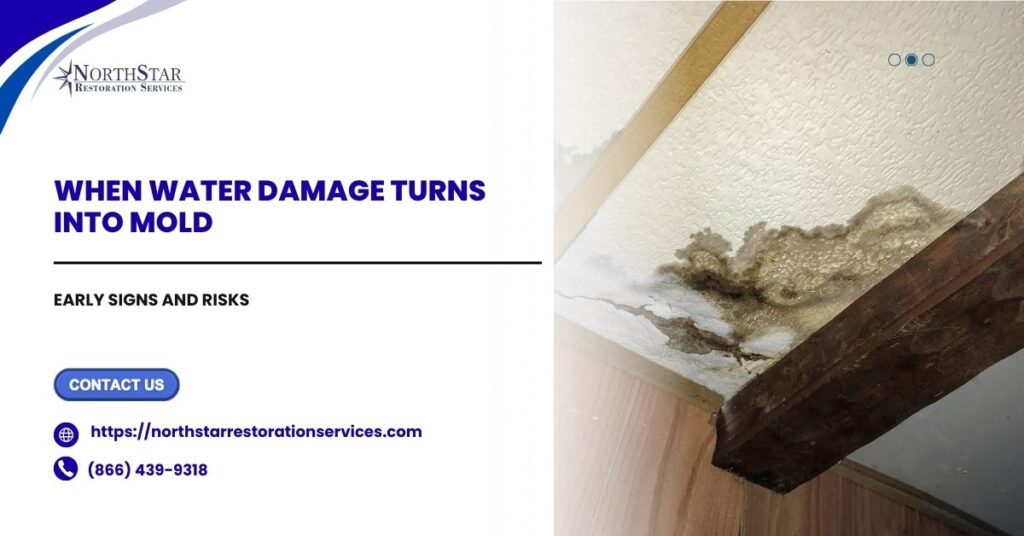
Water damage creates mold in just 24 to 48 hours. You might smell a musty odor before you see any dark spots. Mold threatens your family’s health and your home’s structural integrity. Early detection saves thousands in remediation costs. Northstar Restoration Services helps Wausau homeowners stop mold before it spreads.
The Hidden Clock: Understanding Your Water Damage Mold Growth Timeline
You walk into your basement and feel that damp chill. Maybe you spot a water stain spreading across the ceiling. Perhaps your bathroom smells “off” after that recent leak. Here’s what most homeowners miss: Water damage turns into mold faster than you think.
At Northstar Restoration Services, we’ve responded to thousands of emergency calls across Wausau and Central Wisconsin. We’ve seen pristine hardwood floors destroyed in three days. We’ve found entire colonies thriving behind drywall that looked perfectly fine from the outside. The water damage mold growth timeline doesn’t wait for your convenience.
The 24-48 Hour Rule
Mold spores float through your home every day. They’re harmless until they land on wet surfaces. Give them moisture, and they wake up hungry. Within the first day, microscopic roots dig into drywall, wood, and carpet padding. By day two, you’ve got visible growth. Wait a week, and you’re looking at full mold remediation after water damage—not just cleanup.
Here’s something that keeps us up at night: Wisconsin winters make this worse. When frozen pipes burst in Wausau’s subzero January temperatures, water saturates insulation and wall cavities. The cold slows drying, but doesn’t stop mold. It just waits. Then your furnace kicks on, creating the perfect warm, moist environment for explosive growth.
Spotting Trouble: Signs of Mold After Water Damage
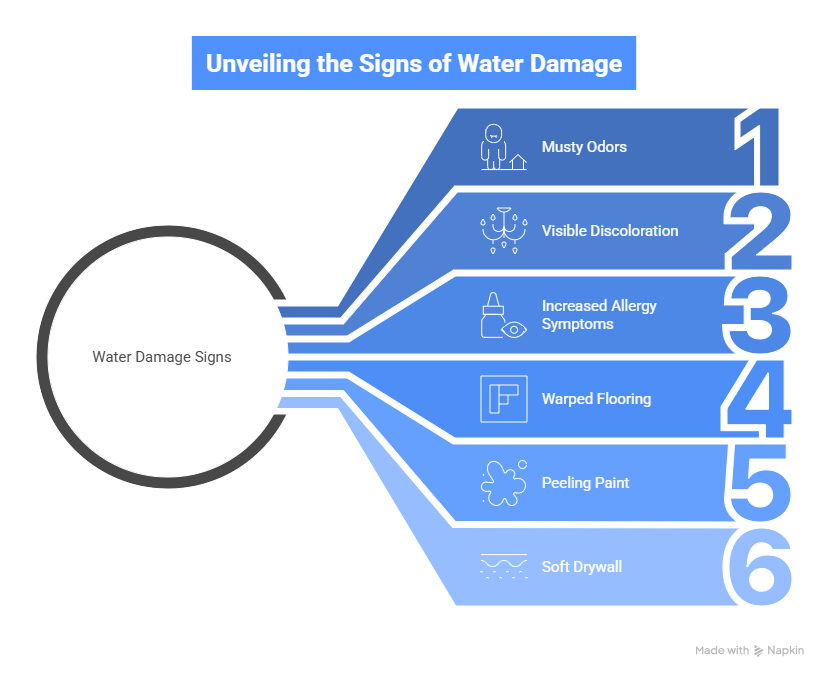
You don’t need X-ray vision to catch mold early. You need to know what your senses are already telling you. Watch for these signs of mold after water damage: Your nose knows first. That musty smell after water damage isn’t “just old house smell.” It’s microbial volatile organic compounds (MVOCs)—basically mold’s exhaust fumes. If your home smells like wet newspapers or earthy basements after a leak, mold is already active.
Your eyes catch clues. Look for discolored patches that seem to grow. They might appear green, black, white, or even orange. Black mold from water leak situations often starts as small dark specks that expand into fuzzy colonies. But don’t fixate on color—toxic mold comes in many shades. Your body reacts. Unexplained allergies, headaches, or respiratory issues after a water event? Your immune system might be fighting something you can’t see yet.
Your walls whisper secrets. Peeling paint, bubbling wallpaper, or warped baseboards suggest hidden mold behind walls. We use professional moisture mapping to find these invisible reservoirs without tearing your home apart.
Critical Warning Signs Checklist
- Musty odors that persist after cleaning
- Visible discoloration on walls or ceilings
- Increased allergy symptoms indoors
- Warped or buckling flooring
- Peeling paint or bubbling wallpaper
- Soft or spongy drywall when pressed
The Wisconsin Factor: Local Risks You Can’t Ignore
Living in Central Wisconsin means dealing with unique moisture challenges. We don’t just handle mold after flooding in the house from summer storms. Our real troublemakers are ice dams and frozen pipes. Ice dams form when heat escapes through your roof, melting snow that refreezes at the edges. Water backs up under shingles, soaking your attic insulation and ceiling drywall. By spring, you’ve got a mold farm in your rafters. We’ve restored countless Wausau homes where homeowners discovered this damage months after the last snow melted.
Frozen pipe bursts are equally sneaky. A pipe cracks in January. You don’t notice reduced flow immediately. Then February warms up, and suddenly your wall cavity is a swimming pool. How long before mold grows after a water leak in this scenario? Sometimes, just hours, because the water has nowhere to evaporate in our tight Wisconsin building envelopes.
Health Hazards: Why Speed Matters
Mold isn’t just ugly. It’s a biological invader that compromises your indoor air quality and well-being. Understanding the health risks of mold exposure motivates smart action. Short-term exposure triggers allergic responses—sneezing, itchy eyes, and skin rashes. But prolonged contact creates bigger problems. Mycotoxins from certain species can cause neurological symptoms, chronic fatigue, and immune suppression. Children, elderly residents, and anyone with asthma face heightened dangers.
We met a Rhinelander family who lived with “minor” bathroom mold for eight months. The father developed persistent respiratory infections. Their pediatrician connected it to home air quality. Our mold remediation after water damage process revealed three separate colonies behind the tub surround. Within weeks of proper remediation, his symptoms resolved. This isn’t rare. It’s physics plus biology plus time. The longer you wait, the deeper mold penetrates building materials, and the more spores contaminate your HVAC system.
The Mold Growth Timeline: What Happens Hour by Hour
Understanding exactly how long before mold grows after water leak situations helps you act decisively. Here’s the breakdown we see in Wausau homes:
Table
| Time After Water Exposure | What Happens Inside Your Walls | Action Required |
| 0-24 Hours | Water saturates drywall, insulation, and wood. Spores activate but remain invisible. | Emergency water extraction begins. Industrial dehumidifiers deployed. |
| 24-48 Hours | Mold colonies establish roots. Musty odors become noticeable. Surface discoloration starts. | Full mitigation required. Affected materials may be salvageable with aggressive drying. |
| 48-72 Hours | Visible mold appears. Spores release into air. Health symptoms begin for sensitive individuals. | Contaminated drywall and insulation likely need removal. Professional remediation essential. |
| 1 Week+ | Structural damage occurs. Wood rot begins. HVAC contamination spreads spores throughout home. | Extensive reconstruction needed. Contents cleaning required. Costs increase 300-500%. |
Prevention Power: Stop Mold Before It Starts
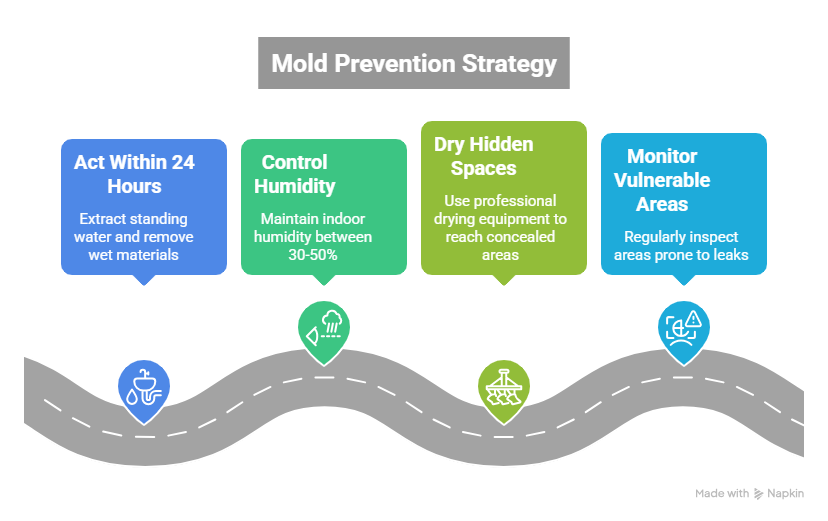
The best mold problem is the one that never happens. Here’s how to prevent mold after water intrusion in your Wausau home:
- Act within 24 hours. This isn’t paranoia—it’s protocol. Extract standing water immediately. Remove wet carpets and padding. Open windows if outdoor humidity allows, or run dehumidifiers if it’s muggy outside.
- Control the invisible enemy. Relative humidity above 60% invites mold. We recommend maintaining 30-50% indoors. In Wisconsin’s humid summers, your air conditioner might not suffice. Consider whole-home dehumidification systems.
- Dry the hidden spaces. Surface drying isn’t enough. Water wicks upward into wall cavities and sideways into subflooring.
- Professional structural drying using industrial air movers and industrial dehumidifiers reaches these concealed moisture pockets.
- Monitor vulnerable areas. Check under sinks monthly. Inspect your attic after heavy snow. Peek behind your washing machine. Catching leaks early prevents the moisture accumulation that feeds mold.
The Remediation Reality: What Professional Help Looks Like
Sometimes, despite your best efforts, mold establishes a foothold. That’s when professional mold remediation becomes necessary—not optional.
At Northstar Restoration Services, we follow IICRC standards (Institute of Inspection, Cleaning, and Restoration Certification) for every project. This isn’t just bureaucracy. These protocols protect your health and your property value.
Our process starts with containment. We seal affected areas to prevent spore migration during removal. Then we remove contaminated materials—sometimes drywall, sometimes insulation, occasionally structural elements if rot has set in. We clean remaining surfaces with antimicrobial treatments. Finally, we verify success through air sampling and visual inspection.
Insurance claims often cover mold remediation when it results from sudden, accidental water damage. We work directly with your carrier, documenting everything to support your claim. Our team speaks the language adjusters need to hear.
Pro-Tip: The Wisconsin Winter Weapon
Here’s something most blogs won’t tell you—our insider secret for Wausau homeowners. Your furnace fan is a mold-fighting tool.
When you discover water damage in winter, don’t just crank the heat. Set your thermostat fan to “ON” instead of “AUTO.” Continuous air circulation prevents the stagnant pockets where mold loves to grow. Combine this with the strategic placement of fans in affected areas, and you buy precious drying time before we arrive with professional equipment.
This works because Wisconsin homes are built tight for energy efficiency. Tight envelopes trap moisture. Continuous airflow disrupts the humid microclimates that accelerate water damage, turning it into mold scenarios.
Your Action Plan: From Discovery to Resolution
You’ve found water damage. Now what? Follow this sequence:
- Stop the source. Shut off water mains for plumbing leaks. Tarp roofs for weather intrusion. Stabilize the situation.
- Document everything. Photograph damage for insurance purposes before moving anything.
- Call professionals immediately. The water damage mold growth timeline ticks whether you’re ready or not. Our 24/7 emergency line at (866) 439-9318 connects you to certified technicians who understand Wausau’s unique challenges.
- Protect your family. If you suspect extensive mold, consider temporary relocation, especially for vulnerable individuals.
- Don’t DIY major contamination. Bleach doesn’t kill mold on porous surfaces—it just bleaches it. Disturbing large colonies releases millions of spores into your air.
Frequently Asked Questions
How fast does mold grow after water damage?
Mold begins growing within 24 to 48 hours of water exposure. Under ideal conditions—warm temperatures, high humidity, organic food sources—visible colonies appear within 72 hours. In Wisconsin’s climate, winter pipe bursts followed by heating system activation can accelerate this timeline significantly. Learn more about mold growth risks.
Can mold grow after a one-time water leak is fixed?
Absolutely. Even “small” leaks saturate materials beyond the visible wet spot. If drywall, insulation, or wood framing stays above 16% moisture content, mold develops. Professional moisture verification ensures complete drying, not just surface dryness.
What does mold smell like after water damage?
Musty, earthy, or like wet cardboard or dirty socks. Some describe it as a stale basement odor. If you smell this after a leak—even without visible mold—you likely have hidden growth behind walls or under flooring.
Is mold from water damage dangerous?
Yes. While not all molds produce toxins, all active mold growth degrades air quality and can trigger allergic reactions, asthma attacks, and respiratory infections. Prolonged exposure to certain species causes serious health complications requiring medical intervention.
Will insurance cover mold removal after water damage?
Typically, yes, if the water damage was sudden and accidental (burst pipes, storm damage). Slow leaks or maintenance issues usually aren’t covered. We recommend reviewing your policy and documenting everything. Northstar assists with insurance claims to maximize your coverage.
Your Home Deserves Expert Protection
Water damage turns into mold with terrifying speed. But you don’t have to face it alone. Northstar Restoration Services brings over 100 years of combined experience to every Wausau home we serve. We’re your neighbors, available 24/7, committed to restoring not just your property, but your peace of mind.
From emergency water extraction to complete mold remediation, we handle every phase under one roof. Our triple-master certified technicians use advanced moisture mapping technology and industrial dehumidifiers to stop mold before it starts—or eliminate it completely when it has.
Don’t let mold compromise your family’s health or your home’s value. Call Northstar Restoration Services now at (866) 439-9318 or visit our facility at 4900 Stewart Ave, Wausau, WI 54401. We’re ready when disaster strikes.